





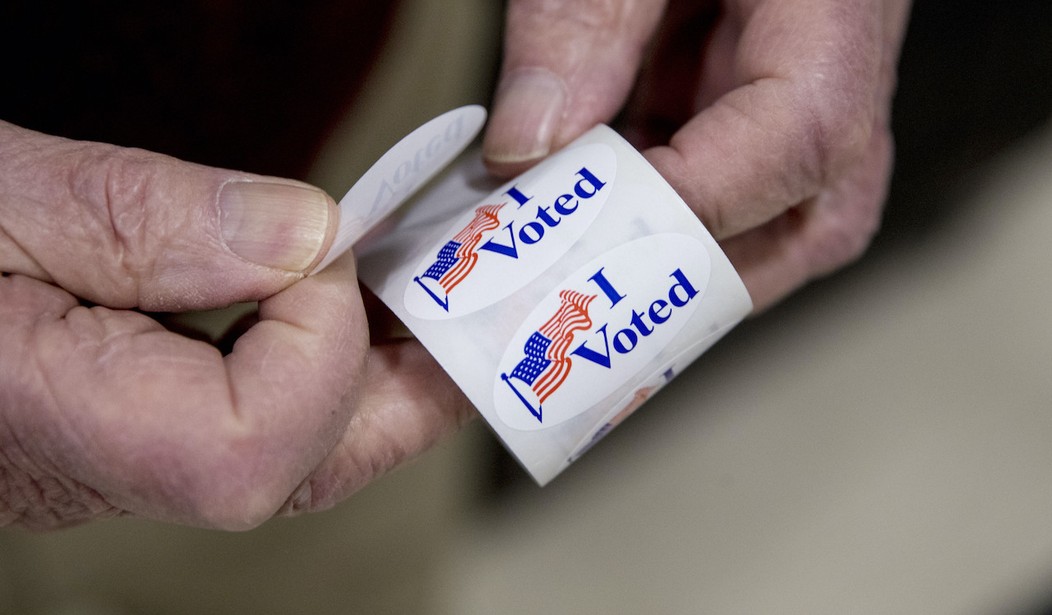
With various states already postponing primary elections in the face of the COVID-19 pandemic, questions are surfacing about whether to postpone the November 3rd general election. The complexities inherent in such consideration would make even the most seasoned constitutional expert’s eyes glaze over.
Though we thankfully appear to be past the peak of COVID-19 infections, there is a real possibility of another viral cycle later this year; meaning the November election could take place in circumstances similar to those we face today, with mandated “social distancing” and “lockdowns” in place. This is where things become seriously and constitutionally muddled.
Per the 20th Amendment to the Constitution, terms of the President and Vice President end at Noon on January 20th. Likewise, every House Member’s term ends on January 3rd, as does the term of every Senator who currently is up for reelection on November 3rd. While Congress is empowered to set the date of the election by law, the terms of the president, the vice president, all 435 House members, and one-third of Senators are set by the Constitution and cannot extend beyond those dates. No “state of emergency” can change this.
So, who would serve as president and vice president if the November 3rd election was postponed? “The Speaker of the House” is the obvious answer, but it is hardly that simple.
Should an election not take place before these terms expire, there would be no Speaker of the House because Nancy Pelosi would not have been reelected to represent the people of the 12th District of California. But, hold on a moment -- since the House elects a Speaker and that person technically need not be a member of the House, could the Democrat-controlled House choose someone else, or would Pelosi remain as Speaker since her title as “Speaker” is not dependent on her being a sitting member of the House?
Also, what would happen in the Senate, with one-third of the seats not filled after January 3rd? There are 22 Republicans up for re-election, and 12 Democrats. Should none of them be seated, the 10-seat net GOP loss, which would include current Majority Leader Mitch McConnell, would leave Democrats with a majority and an open leader seat.
This has implications for the line of succession, assuming as well that President Donald Trump’s term would end, and the presidency be vacant. The President Pro Tempore of the Senate is next in line after the Vice President and the Speaker of the House. Iowa Sen. Chuck Grassley, currently the most senior Republican senator, now serves in that largely honorary post, but it is not clear if he would (or could) be chosen to continue after next January 3rd (his term runs to January 3, 2023). Democrat New York Sen. Chuck Schumer serves now as Minority Leader in that body and his term continues also to January 3, 2023, so he would be a key player, especially if the consequence of all this puts his Party in the majority.
What about the Electors, chosen by the states per Article I Section 1 and as modified by the 12th Amendment to the Constitution? Would they still vote for President, even if the popular vote in each state did not take place? Would each one be free to vote for whomever he or she wished, or beholden to some other bellwether of public opinion to cast Electoral College ballots?
Complicating the matter even further is that administratively, elections are a function of the states, and not subject to presidential or congressional mandates. Would some states where the virus is particularly bad cancel their election, while others continue with voting; and, does this change how many Electoral votes are needed in order to be elected president, since the 12th Amendment only requires a majority of the Electors who have been appointed? What happens if a state chooses an alternative voting method? Should those votes be counted, or dismissed? Who decides?
States of emergency now are in place in every state and territory, overlaid since March 13th with a federal “state of emergency.” These measures, considered in many respects draconian, are being supplemented by local emergency declarations by municipal officials in communities across the nation.
This situation already is eating away at the civil compact between citizens and government, and between state and federal authorities; a construct carefully woven into the fabric of our constitutional republic. Adding to this perilous condition by deferring the November general election, could very well push us toward a darkness into which our country never has descended.

Join the Conversation
VIP members get the ability to comment on articles.