




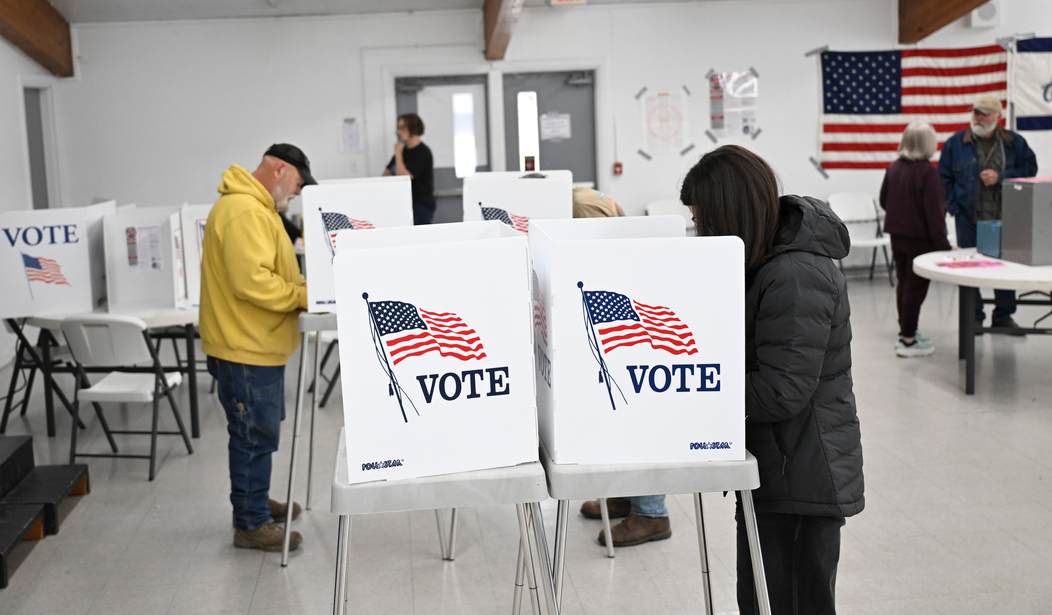
"Our voters are turning out, but they may not vote for us."
Vice President JD Vance says "the smartest data guy I know" gave him that warning before the election. By his account, turnout was "merely OK" in some states and "downright amazing" in others.
Republican ground-game consultants – with permission from the candidates themselves– became the kind of toxic leader I call the Scorekeeper: the leader who mistakes the scoreboard for the game itself. They're hard to spot because they usually mean well, but they are toxic because they degrade the performance of the team overall.
They want results, and a number feels like the shortest path to getting them. Numbers impress donors. But results impress them more. No amount of door knocking was going to make up for what people were paying for groceries or gas, or their belief that the war with Iran was compounding these pain points.
What truly binds voters to a party is a combination of commitments and performance. Incumbents have the privilege and the challenge of their record. Untested politicians can promise the world, and if they’re convincing, they very well might win. That’s why a community organizer like Barack Obama or a sixth-grade English teacher like James Talarico gets elected.
Once you’re in office, you have to deliver. In 2024, the point for voters was not to elect Republicans; the point was to fix what Biden had destroyed and offer relief to what burdens the middle class. They believed Republicans had a more convincing path forward.
Republican consultants were paid very, very well to hit their numbers in the midterms, and if Vance's data is right, they mostly did. The volunteers who walked those neighborhoods did what was asked of them. This failure is on the shoulders of the strategists and candidates who decided what was worth counting.
You can see it most plainly with hispanic voters. They supported Donald Trump in historic numbers in 2024, and too many Republicans in Congress treated those voters as lifetime members of the GOP. By October, only about a third of hispanic Trump voters rated the economy as good, down from more than half at the start of the year, according to Pew. President Trump's approval among Hispanic voters who backed him in 2024 fell from 93% to 57 percent in Pew's polling. He carried Starr County, Texas, two years ago, and Talarico won it with 77 percent of the vote.
It was telling that Vance’s data guy referred to “our voters.” No voter belongs to a party. A Scorekeeper makes erroneous mental shortcuts, like thinking 2024 Republicans are 2026 Republicans. A vote is always a secured loan, and voters can repossess it every election cycle.
Voters gave Republicans a chance to deliver for them and waited to see if they would.
On paper, the economy is humming along. GDP and GDI are up, and the Working Families Tax Cut, the senior tax credit, business tax breaks, and Trump accounts are real and valuable. But wages aren’t keeping pace with inflation; prices are up, and the AI data center boom has left a lot of voters feeling they have no say in what happens to their communities. Political scorekeepers seem to think one positive economic number erases a negative economic number. It’s the numbers that hit closest to home that matter most.
You can turn out every Republican-leaning voter in the country and still lose if they're angry with you.
On election night, GOP strategist Mercedes Schlapp posted on X, “Go back to the basics: be humble, listen to the American people, stand for the working man and woman and always fight for freedom.” She’s right, and that strategy has nothing to do with numbers or keeping score. It has to do with relatability, soft skills, and focus.
Whenever a relationship is wounded because you took someone for granted, you don’t change who you are or recalibrate what you need to say to change a poll number. You simply change your behavior – you re-cultivate the relationship with voters by showing you’re sorry and championing good ideas. That kind of human response inspires people, especially voters.
What Republicans need is a party fixated on what's hurting working Americans and willing to use conservative principles to fix it. Undoubtedly, some Republicans will say the answer is to move to the middle. That’s another scorekeeper move–to focus on numbers but not value. More support for bad ideas isn’t what winning looks like. If we believe Marxism and socialism are a road to ruin, let’s not own that road. Let the Left keep it.
Sophisticated data analysis and strategy are great, but only if you get the basics right.
The Republican Party doesn’t have to think too hard about what to do next. If they win the middle-income voter, they win the country. Families need to feel that they can prosper in the economy and not just get by. Homeowners need to be heard when they’re concerned about data centers. Single people shouldn’t feel that marriage, kids, and a home are financially untenable while reading headlines about how many billionaires are becoming centibillionaires in the U.S.
Take care of the people and the votes will follow. Republicans have two years to figure that out.
Editor’s Note: Do you enjoy Townhall’s conservative reporting that takes on the radical Left and woke media? Support our work so that we can continue to bring you the truth.
Join Townhall VIP and use promo code FIGHT to receive 60% off your membership.

Join the Conversation
VIP members get the ability to comment on articles.