





The United States faces threats that extend beyond the familiar divide between Democrats and Republicans. Increasingly, two ideological movements — one on the far left, one emerging on the populist right — share a willingness to undermine the principles that have long defined the American experiment.
On one side stands the Democratic Socialists of America, whose influence within the Democrat Party has grown dramatically. This is no longer simply a debate over tax rates or entitlement programs. The party's activist wing has become increasingly hostile to the ideas that have undergirded the country for 250 years: freedom of speech, religious liberty, private property, free markets and the belief that America is an exceptional nation worth preserving.
The political consequences are no longer hypothetical. Democrats have a realistic chance to regain control of Congress in the 2026 midterm elections. Competitive Senate races across North Carolina, Ohio, Maine, Texas, Alaska and Iowa underscore how narrow the margins have become. If Democrats were to reclaim both the House and Senate, the ramifications would extend far beyond the next two years.
The federal judiciary is the clearest example.
Supreme Court Justices Clarence Thomas and Samuel Alito are both in their late 70s. Should vacancies arise while Democrats control the Senate, the ideological balance of the court could shift for a generation. A new liberal majority would influence constitutional interpretation on everything from executive authority and religious liberty to economic regulation and the administrative state. At the same time, Democrats would accelerate confirmations throughout the federal judiciary, leaving an imprint that would outlast any single administration.
Those stakes make recent developments on the right especially consequential.
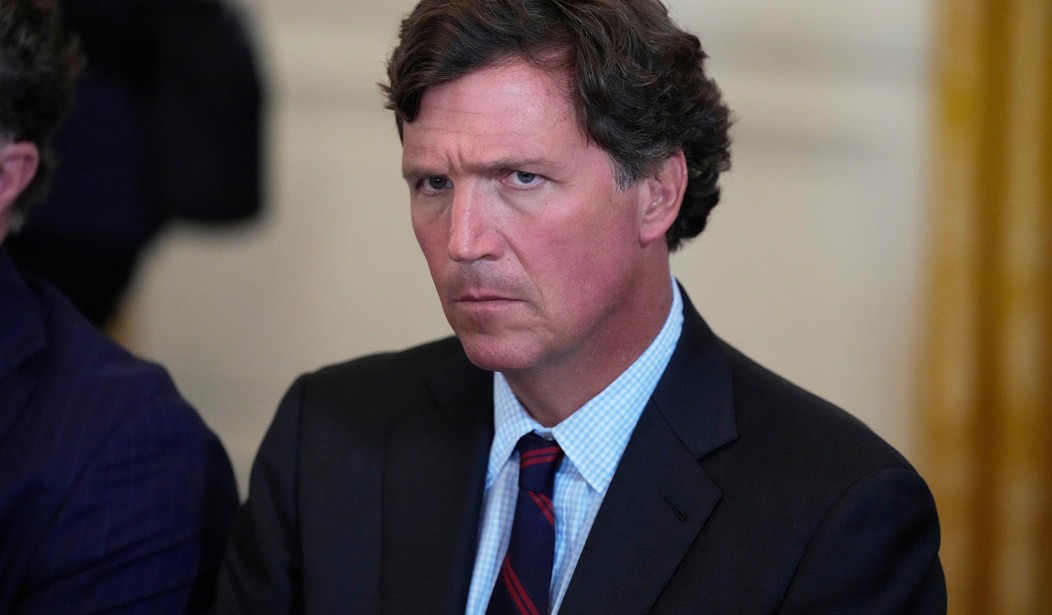
Tucker Carlson has spent recent weeks floating the idea of launching a third political party, arguing that Republicans and Democrats are effectively indistinguishable on issues of war, spending and finance. He portrays America's two-party system as little more than a single political establishment masquerading as democracy.
That argument ignores the most significant policy differences in American politics. Republicans and Democrats remain sharply divided over taxation, judicial appointments, regulation, free markets, energy policy and the proper role of government. Pretending those distinctions no longer exist requires overlooking the very issues that define modern elections.
Carlson's broader political philosophy has also drifted away from traditional conservatism. Over the past several years, he has increasingly criticized free-market capitalism, questioned longstanding American foreign policy, and adopted a form of economic nationalism that bears little resemblance to the conservative movement's traditional commitment to limited government and free enterprise.
More than likely, Carlson is not seriously preparing to build a viable third party. American political history offers little reason to believe such an effort would succeed. Ross Perot's independent 1992 campaign remains one of the strongest third-party performances in modern history, yet his Reform Party, launched in 1995, quickly collapsed. The structural realities of American elections overwhelmingly favor two major parties with established fundraising networks, ballot access and national organizations.
Rather than constructing an alternative party, Carlson appears to be positioning himself for the aftermath of the 2026 elections. If Republicans lose seats — as the president's party often does during midterm elections — he can argue that the defeats occurred because Republicans ignored his vision for the party. Electoral losses then become evidence that the GOP should move in his ideological direction.
That makes his current rhetoric politically significant even if no third party ever appears on the ballot. Republicans already face the historical disadvantages of defending Congress during a president's midterm. Voices on the right openly rooting for Republican defeats only increase the likelihood that Democrats, increasingly influenced by their progressive wing, will gain power.
Following the nation's semiquincentennial, the debate should return to first principles rather than political personalities.
For 250 years, America's strength has rested on enduring ideas: constitutional government, individual liberty, private property, free enterprise, religious freedom and peace through strength. Those principles have survived wars, economic crises and political upheaval because each generation chose to defend them rather than discard them.
The greatest challenge facing the country may not come from a single ideological movement but from competing factions that, despite their differences, are increasingly willing to abandon those foundational principles. If the United States is to thrive into its 300th anniversary, its 500th and beyond, it will depend not on charismatic personalities or political factions but on whether Americans remain committed to the ideals that made the republic possible.
Ben Shapiro is a graduate of UCLA and Harvard Law School, host of "The Ben Shapiro Show," and co-founder of Daily Wire+. He is a three-time New York Times bestselling author.
Editor’s Note: Do you enjoy Townhall’s conservative reporting that takes on the radical Left and woke media? Support our work so that we can continue to bring you the truth.
Join Townhall VIP and use promo code FIGHT to receive 60% off your membership.

Join the Conversation
VIP members get the ability to comment on articles.