





For years, much of the American media has operated under a peculiar assumption: that the best way to confront adversaries such as China and Iran is to accommodate them. If the United States applies pressure, the narrative quickly becomes that America is overextended, losing leverage, or somehow empowering its enemies.
That narrative has resurfaced during President Donald Trump's confrontation with Tehran and Beijing. According to outlets such as The New York Times and The Washington Post, both Iran and China are supposedly emerging stronger from the current conflict.
It is a difficult claim to square with reality.
Iran's senior military leadership has been decimated. Its regional proxy network has been weakened. Its economy remains in severe distress, and its military capabilities have been heavily degraded. Yet much of the media coverage treats Iran's mere survival as evidence that it is somehow winning.
The New York Times recently argued that Iran had "succeeded in confounding U.S. and Israeli expectations for a speedy victory," suggesting that Tehran had created a kind of stalemate. But modern wars rarely end with formal surrender ceremonies or total collapse. By the standards of contemporary warfare, weakening an enemy's military leadership, degrading its economy, and limiting its regional influence would traditionally be viewed as significant strategic gains.
Instead, media coverage often defines victory so narrowly that any continued resistance by Iran becomes proof of American failure.
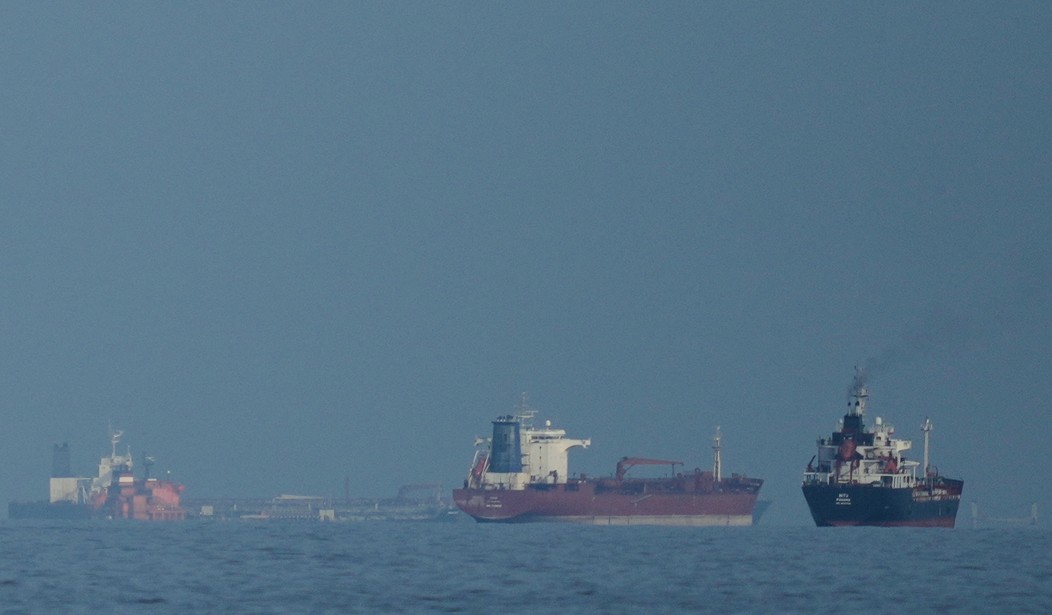
The Times also suggested that Iran had "maintained control" over the Strait of Hormuz. But if Iran truly controlled the Strait in any meaningful sense, it would be freely exporting its own oil and profiting from commercial traffic through the region. It is doing neither. Iran's threats against shipping lanes reflect desperation and leverage-seeking behavior, not dominance.
In fact, instability in the Strait creates problems not only for the United States and its allies but also for China, which depends heavily on imported oil flowing through the Gulf. That reality complicates the simplistic narrative that Beijing somehow benefits automatically from chaos in the Middle East.
To be sure, the Trump administration has exercised restraint in certain areas, particularly regarding direct attacks on Iranian energy infrastructure. But that restraint reflects strategic calculation, not weakness. Completely destroying Iran's energy sector could devastate the Iranian population and eliminate the economic foundation for any future moderate government.
The same pattern appears in coverage of China.
The Post recently highlighted a reported intelligence assessment claiming that Beijing is exploiting the Iran conflict to maximize its advantage over the United States. The report pointed to Chinese weapons sales, diplomatic messaging and China's ability to study American military operations.
None of that is surprising. Great powers routinely study conflicts and attempt to exploit geopolitical openings. That does not mean they are winning.
China still faces the same structural problems it faced before the conflict began: slowing economic growth, demographic decline, mounting debt and heavy dependence on imported energy. Prolonged instability in the Middle East threatens Beijing's economy as much as Washington's.
The Post also emphasized concerns that the conflict is depleting American munitions stockpiles that could be needed in a future Taiwan contingency. That concern is legitimate. But it reflects years of inadequate defense production and military downsizing under previous administrations, not some strategic triumph by Beijing.
Critics of American foreign policy often argue that China can portray the United States as an aggressive power in decline. But China's own behavior makes that argument difficult to sustain. Beijing continues threatening Taiwan, tightening control over Hong Kong, expanding military influence across the Pacific, and pressuring neighboring countries throughout Asia.
The idea that China is positioned to win a global moral argument against the United States requires overlooking much of Beijing's conduct.
Ultimately, the broader media narrative reflects a longstanding tendency in parts of the American press to interpret nearly every assertion of U.S. power as evidence of American weakness. Military action becomes proof of overreach. Economic pressure becomes recklessness. Adversaries surviving become adversaries winning.
But survival is not victory, and disruption is not dominance.
Whatever criticisms one may have of Trump's foreign policy, the central premise of his approach remains straightforward: American strength deters adversaries more effectively than accommodation does.
History suggests that argument deserves more serious consideration than much of the current media coverage is willing to give it.
Ben Shapiro is a graduate of UCLA and Harvard Law School, host of "The Ben Shapiro Show," and co-founder of Daily Wire+. He is a three-time New York Times bestselling author.
Editor's Note: For decades, former presidents have been all talk and no action. Now, Donald Trump is eliminating the threat from Iran once and for all.
Help us report the truth about the Trump administration’s decisive actions to keep Americans safe and bring peace to the world. Join Townhall VIP and use promo code FIGHT to get 60% off your VIP membership.


Join the Conversation
VIP members get the ability to comment on articles.