





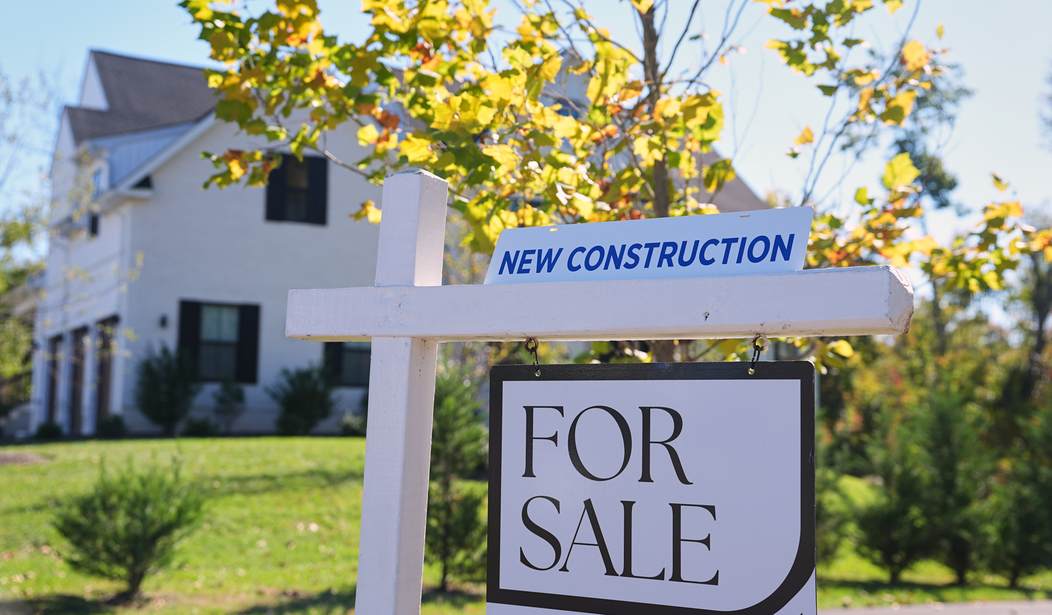
The dream of home ownership is disappearing for many Americans. Inflationary increases in home prices, property taxes, home insurance and other costs of maintaining a home are pricing many citizens out of the housing market.
This is especially true for younger generations. The average age of first-time home buyers has increased to an all-time high of 40 years. The share of first-time home buyers is at a record low of 21 percent. The share of first-time buyers has contracted by 50 percent since the financial crisis in 2007.
Older homeowners are also impacted by the sharp increase in property taxes and other costs of home ownership. Twenty years ago, I purchased a home in a 55+ community. Since then, home prices in our community have doubled and property taxes and HOA fees have more than doubled. Fewer citizens can afford to purchase these homes, and some residents on fixed incomes have literally been taxed out of their homes.
When a government taxes unrealized capital gains in a home it is taxing paper profits that may never be realized. This year the value of homes in my community has fallen. With some lag the assessed value of my home will decrease to reflect the lower value, meanwhile I pay property taxes on capital gains that may never be realized.
As fewer citizens can afford to purchase and maintain a home this has had a profound impact on our society. Historically home ownership has been the basis for upward mobility. Investing in a home and paying off a home mortgage provided a family with the wealth needed for a comfortable retirement and other financial needs. Younger generations could inherit a home, allowing families to prosper from one generation to the next. Home ownership has been the most important path for upward mobility of middle-class families.
Home ownership is no longer the path for upward mobility since many citizens can no longer afford to purchase and maintain a home. Not only has this diminished upward mobility, but it has also resulted in decompression of incomes.
Decompression occurs when income of families above the median income increases faster than that of middle-income families. In recent years the income of families in the 80th percentile and above has increased significantly faster than the income of families at the median income level.
Elected officials in some states have responded to the decompression in incomes by proposing wealth taxes, but wealth taxes have unintended consequences. California’s proposed 5 percent tax on the net worth of billionaires has not been well received. California citizens watch as billionaires leave the state taking their businesses with them, decreasing the economic prospects for citizens left behind.
There is an alternative to wealth taxes that can restore upward mobility and decrease inequality that does not have these unintended consequences. Elected officials across the country are proposing measures to reduce the burden of property taxes. Elected officials in five states have proposed eliminating property taxes on owner-occupied homes (Florida, Georgia, Indiana, North Dakota, and Texas). But property taxes are the foundation for our federalist system. Local governments rely on property taxes to fund education and other public services.
There is an alternative approach that provides relief from property tax burdens but retains them as a source of finance for local government. The following is a brief description of an Affordable Property Tax Cap Amendment proposed by the Prosperity for US Foundation.
A property’s taxable value is determined at the time of purchase and can only be adjusted to reflect the cost of structural additions. The taxable value, as adjusted, is fixed as long as the homeowner remains in the home. When a property is sold, the taxable value is reset to the full purchase price, or if transferred, the fair market value. A majority vote of affected property owners is required for any increase in the property tax rate. Property taxes include fees which could become a lien on the property.
An Affordable Property Tax Cap Amendment corrects the major flaw in our current property tax system, it eliminates taxation of the unrealized capital gains in a property. As long as the homeowner remains in the home the taxable value is fixed; inflation may increase the market value of the home, but it does not impact the taxable value of the home.
The step-up basis for homes as well as financial assets is retained. When the home is sold, the taxable value is increased to market value for heirs. This allows the homeowner and heirs to avoid property taxes on the capital gains in their home entirely. Taxes are paid on realized capital gains only if the property is sold or transferred.
The Amendment treats property assets the same as financial assets for tax purposes. With the Amendment in place citizens would again have an incentive to invest in a home as well as financial assets to meet their retirement and other needs. They would pay higher property taxes only for citizen approved increases in property tax rates imposed by the county. With the Amendment in place the decision to invest in a home or financial assets is not biased by tax laws, citizens would not have to pay taxes on unrealized capital gains in either their homes or financial assets.
Loss of upward mobility and decompression of incomes is a major source of dissatisfaction and conflict in American society. The closing opportunities for home ownership, especially for younger generations, have become a flash point in this conflict. Elimination of taxes on unrealized capital gains is the most effective way to provide upward mobility and reduce inequality in income and wealth, without the unintended consequences of wealth taxes.
The Affordable Property Tax Cap Amendment could restore the upward mobility dream of homeownership for low- and middle-income families without cutting property taxes needed in our federalism system to fund education and other public services. Citizens could petition their state legislators in 34 states and Secretary of State in 16 States to place the Amendment on the next ballot. In 16 initiative petition states, voters could E-Sign petitions authenticating their signatures. If the number of authenticated signatures exceeds the constitutional mandate, their Secretary of State would be mandated to place Affordable Property Tax Cap Amendment on the ballot.
Barry W. Poulson is professor emeritus at the University of Colorado, Boulder Colorado, and on the Board of the Prosperity for US Foundation
Editor’s Note: Do you enjoy Townhall’s conservative reporting that takes on the radical left and woke media? Support our work so that we can continue to bring you the truth.
Join Townhall VIP and use promo code FIGHT to receive 60% off your membership.



Join the Conversation
VIP members get the ability to comment on articles.