





Every time questions arise about the advanced age of America's elected leaders, Washington responds with the same familiar refrain: Experience matters.
Republicans say it. Democrats say it. Editorial writers repeat it. Longevity in office, we're told, produces wisdom, steadier judgment and better public policy.
It's an appealing argument. It also invites a simple question: If experience matters so much, where are the results?
Experience can absolutely be an asset. A seasoned physician has seen diseases a younger doctor has not. A veteran CEO has navigated recessions and market upheavals. A career military officer possesses judgment that cannot be taught in a classroom. But in every profession, experience is valued because it is expected to produce better outcomes.
We don't celebrate years on the job. We celebrate what those years have accomplished.
Congress, however, seems to be the one institution where longevity itself has become the credential. That would be easier to accept if Congress were producing exceptional results.
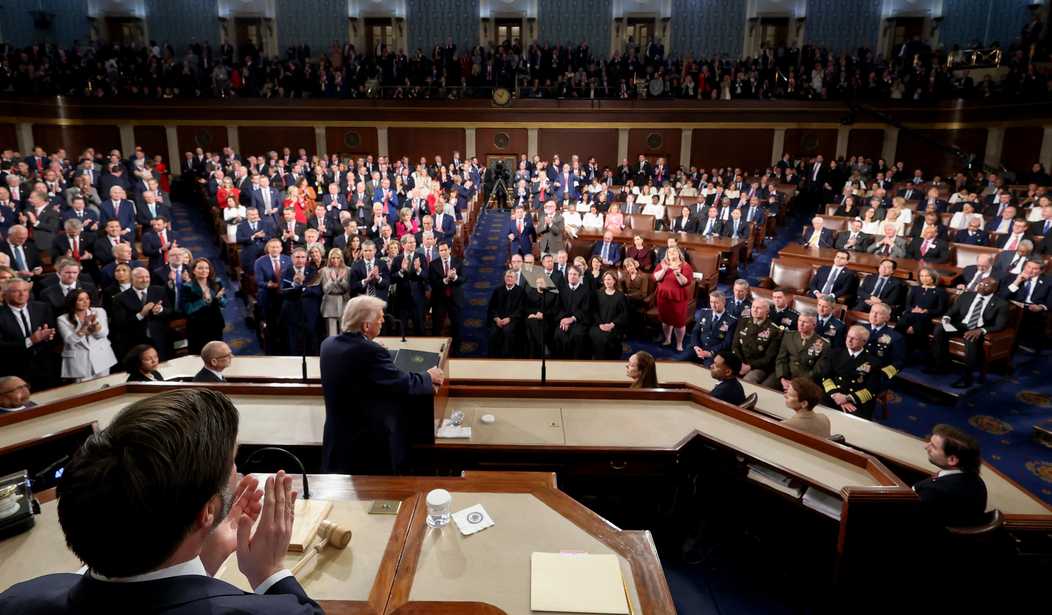
Instead, today's Congress is among the oldest in American history. The median senator age is about 65 years old, and the median House member age is nearly 58. Roughly 120 members of Congress are now over the age of 70, with nearly 20 over 80. Compared with the Congresses of the 1980s or even 2000, today's institution is markedly older.
Age itself isn't the problem. Some of America's finest legislators served well into their 70s and 80s. This is not an argument against older Americans serving in public office. It is an argument against assuming that age, by itself, is evidence of wisdom. If experience naturally produced better governance, one would expect Congress to enjoy greater public confidence than ever before.
Instead, congressional approval has spent much of the last 15 years mired in the teens and low 20s. Americans consistently rank Congress among the least-respected institutions in public life, regardless of which party controls it.
The institution itself tells a similar story. Budget deadlines routinely become crises. Continuing resolutions have replaced the discipline of passing regular appropriations bills. Debt-ceiling confrontations have become annual political theater. Omnibus legislation, often thousands of pages long, is rushed through with little time for members to fully review it.
This is not the mark of an institution benefiting from decades of accumulated wisdom. It is the mark of an institution increasingly comfortable governing from one self-inflicted emergency to the next.
Nowhere is that disconnect more troubling than on the issue where experience should matter most: America's fiscal future.
Members who entered Congress around the turn of the century inherited a national debt of roughly $5.6 trillion. Today, that figure exceeds $37 trillion. Debt held by the public has risen from roughly 55 percent of the GDP to approximately 100 percent. Annual interest payments now exceed $1 trillion, consuming resources that could otherwise strengthen our military, modernize infrastructure, or reduce the burden on future generations.
None of this happened overnight. It unfolded over decades while many of today's most experienced lawmakers occupied positions of power.
Which raises another uncomfortable question: If experience is supposed to produce foresight, where was the foresight?
Wise leaders do more than witness problems unfold. They recognize danger before it becomes crisis. They warn others. They change course.
On the defining fiscal challenge of our time, Congress has largely done the opposite. Republicans and Democrats alike have contributed to today's debt. Both parties have found reasons to postpone difficult choices. Both have grown more comfortable managing the consequences than confronting the causes.
That isn't a partisan criticism. It's a bipartisan failure.
The same can be said of our increasingly polarized politics. One might expect lawmakers who have lived through Vietnam, Watergate, the Cold War, the Great Recession and countless political cycles to bring greater perspective to today's debates. Instead, Congress has become more divided, more performative and more consumed by the next news cycle than the next generation.
Washington has confused seniority with statesmanship. They are not the same thing.
Statesmanship is not measured by birthdays or years served. It is measured by judgment, courage and results. It means confronting difficult truths before they become national emergencies. It means thinking beyond the next election to the next generation.
None of this suggests younger lawmakers would automatically do better. Youth is no guarantee of wisdom, just as age is no guarantee of sound judgment. The point is much simpler: Voters should stop accepting longevity as proof of effective leadership. Experience should never be an argument unto itself. It should be demonstrated through better governance, greater public trust, fiscal responsibility and an institution stronger than the one a lawmaker inherited.
Those are the standards we apply to physicians, military commanders, business leaders and judges. Congress should not be exempt.
Experience matters.
But results matter more.
Armstrong Williams is manager/sole owner of Howard Stirk Holdings I & II Broadcast Television Stations and the 2016 Multicultural Media Broadcast owner of the year.
Editor’s Note: Do you enjoy Townhall’s conservative reporting that takes on the radical Left and woke media? Support our work so that we can continue to bring you the truth.
Join Townhall VIP and use promo code FIGHT to receive 60% off your membership.



Join the Conversation
VIP members get the ability to comment on articles.