





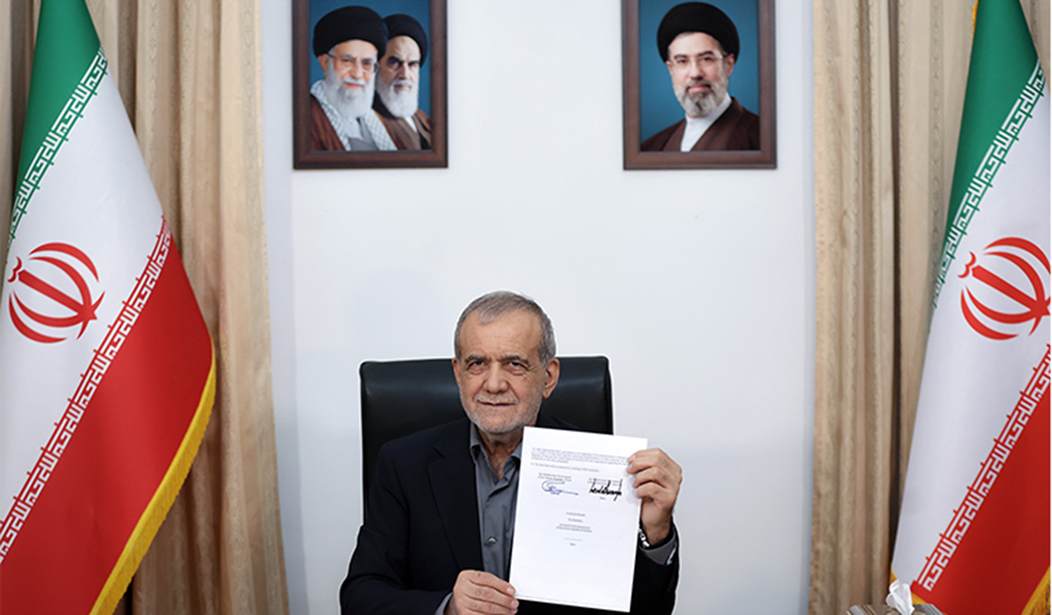
One of the dangers of war is that political rhetoric often collides with strategic reality.
President Donald Trump spent years vehemently criticizing former President Barack Obama's Iran nuclear deal, arguing that it failed to permanently halt Iran's nuclear ambitions while providing the regime with economic relief and resources that strengthened its position throughout the Middle East. He called it one of the worst foreign policy agreements in modern American history. Millions of Americans agreed with him.
The criticism was straightforward. Iran, many argued, received billions of dollars in sanctions relief without permanently dismantling its nuclear infrastructure. The agreement may have delayed Tehran's ambitions, but it did not eliminate them. Critics believed the deal rewarded bad behavior, strengthened a hostile regime and ultimately left the world no safer than before.
Fast-forward to today.
After military strikes, escalating tensions and a conflict that many believed would fundamentally alter the balance of power in the Middle East, we appear to be arriving at a familiar destination: negotiations, concessions and an Iranian regime that remains standing.
That reality deserves a serious conversation.
Supporters of the administration will rightly point out that Iran has suffered significant military and strategic setbacks. Key facilities have been targeted. Military assets have been degraded. Iranian leadership has been forced to confront pressures unlike any it has faced in years. They argue that any future agreement will be negotiated from a position of American strength rather than diplomatic accommodation.
That argument has merit.
Yet critics are asking an equally important question.
If the ultimate result leaves the regime intact, preserves much of its regional influence, and opens the door to substantial economic relief or renewed access to international markets, how different is the final outcome from what Trump spent years condemning?
The contradiction is difficult to ignore.
For nearly a decade, Republicans argued that economic relief flowing to Tehran would inevitably strengthen the regime's ability to pursue its objectives. They warned that money is fungible. Every dollar used to stabilize the economy frees another dollar for military programs, regional proxies, missile development and, potentially, nuclear research.
Those arguments did not disappear simply because a Republican administration now finds itself navigating the same geopolitical realities that confronted its predecessors.
The hard truth is that wars are often easier to begin than they are to finish.
Military superiority does not automatically translate into political outcomes. Nations under immense pressure frequently prove more resilient than expected. Adversaries rarely collapse on schedule. They adapt. They absorb punishment. They find ways to survive.
History offers countless examples.
The United States entered Iraq expecting a democratic transformation of the Middle East. Instead, it encountered years of instability and unintended consequences. Afghanistan demonstrated that even overwhelming military power cannot always impose political outcomes on determined adversaries. Across generations, presidents of both parties have discovered that the battlefield and the negotiating table often produce very different realities.
That is the fog of war.
Expectations of decisive victory often give way to complicated settlements, imperfect compromises and unanswered questions.
The public is frequently promised clear outcomes. Reality delivers shades of gray.
The larger issue extends beyond Iran.
It speaks to a recurring tendency in American politics. Candidates often campaign by denouncing the perceived failures of those who came before them. They promise stronger leadership, tougher negotiations and better outcomes. Once in office, however, they encounter the same constraints, risks and geopolitical complexities that challenged their predecessors.
The choices suddenly become less ideological and more practical.
That does not mean every agreement is equal. Nor does it mean military action was unnecessary or ineffective. It simply means governing is more complicated than campaigning.
Today, the central question is not whether American military power remains formidable. It does.
The question is whether the current trajectory ultimately leaves Iran less capable of threatening its neighbors, sponsoring terrorism, destabilizing the region and pursuing nuclear ambitions than it was before this conflict began.
That is the only measure that will matter in the long run.
Political speeches fade.
Television appearances are forgotten.
Partisan celebrations eventually end.
What remains are the consequences.
If future historians conclude that Iran emerged weakened, constrained and less dangerous, the administration will have a compelling case that its strategy succeeded.
If they conclude that the regime survived, rebuilt its capabilities, regained access to significant financial resources, and resumed activities that threaten regional stability, many Americans will inevitably ask whether the United States traveled a far more dangerous road only to arrive at a destination that looks remarkably familiar.
That is not a partisan observation.
It is a reality check.
And reality checks are often the first casualty when nations find themselves in the fog of war.
History will render the final verdict long after today's headlines have faded.
Armstrong Williams is the manager/sole owner of Howard Stirk Holdings I & II Broadcast Television Stations and the 2016 Multicultural Media Broadcast owner of the year.
Editor’s Note: Do you enjoy Townhall’s conservative reporting that takes on the radical Left and woke media? Support our work so that we can continue to bring you the truth.
Join Townhall VIP and use promo code FIGHT to receive 60% off your membership.

Join the Conversation
VIP members get the ability to comment on articles.