





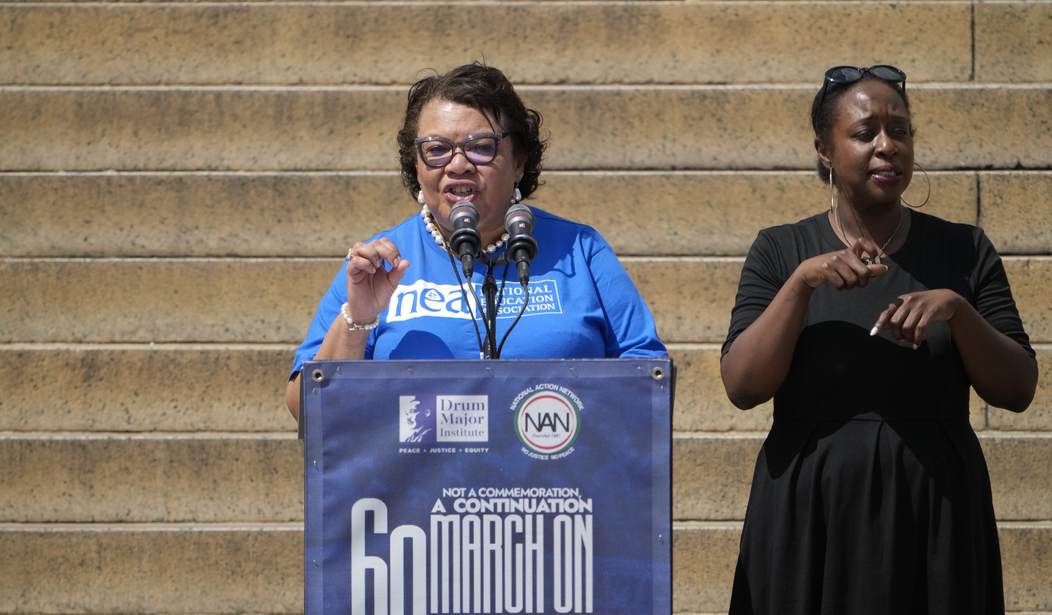
On September 1, 2026, former Virginia music teacher Princess Moss took over leadership of the largest teachers' union in the country. With approximately 3 million members, the National Education Association (NEA) is the foremost voice of public education nationally.
Her first line of business: “organize, organize, organize.” She asserts that a teacher can’t separate teaching from activism.
Let’s pause for a moment and take this in. Do parents want teachers, or do we want political activists in our classrooms?
As a former public-school teacher and principal, I believe a hallmark of a good teacher is not activism, but faithful stewardship. Parents entrust teachers with real but limited authority: to teach their children well, cultivate intellectual curiosity, maintain an orderly classroom, identify educational needs, and help students pursue what is true.
That responsibility will sometimes require a teacher to speak up when a student needs additional resources, related services, or a different mode of instruction. But that is an extension of the teacher’s educational responsibility, not a license to assume the role of parent, political organizer, or ideological advocate.
There is a fundamental difference between educating a student and recruiting one to a cause. A teacher should equip students to think carefully about competing ideas, examine evidence, recognize different worldviews, and pursue truth. Political activism asks something different: that the teacher use the authority and influence of the classroom to move students toward a preferred political outcome.
There is no place for this in the classroom.
When asked about the rapid change in the classroom and the evolution of the profession, Moss stated, “I’m sick and tired of people who drive by school, who have never been inside of school, telling us what to do with our kids. They don’t know anything about how to teach, or what our kids really need.”
Does the brazen, politically left-leaning teachers' union know more about “what kids really” need than their parents?
If a teacher openly identifies as a political activist in the classroom supporting and rallying around causes in contrast with the values that a parent holds for their child, what is a parent reasonably to conclude?
Are they receiving an education or an ideological agenda? Parents do not want politics in the classroom. Asking kids what their preferred pronouns are, and requiring boys to play in girls' sports, has no place in education. Parents are sick of the culture war the Left keeps bringing into the classroom.
Parents have a reasonable expectation that their child’s teacher and the school are partners with them and not in direct competition for influence over their child’s values and worldview.
There is no such thing as worldview-neutral education. Every teacher brings assumptions about truth, human nature, morality, authority, and the purpose of education into the classroom. Those convictions inevitably shape what teachers emphasize, what they dismiss, the questions they ask, and how they teach students to understand the world. That reality should make parents and school boards more careful about whom they entrust with the education and formation of children.
The late theologian and educator Voddie Baucham put the warning memorably: “We cannot continue to send our children to Caesar for their education and be surprised when they come home as Romans.” Parents should take seriously who is teaching their children, what those teachers believe, and what worldview assumptions are being transmitted alongside reading, mathematics, science, and history. Sadly, too often, teachers are replacing academics with activism, and student outcomes nationwide show it.
Our children need teachers with an objective view of reality and the character and discipline to teach rather than recruit them into political causes. And parents need the authority and freedom to act when schools lose sight of that distinction. They should demand that school boards return classrooms to rigorous academics and reject political ideology and activism masquerading as education. And when schools refuse, families should have meaningful alternatives, whether another public school, a charter school, cyber school, private or Christian education, or homeschooling.
Sometimes the best answer to an institution that has lost sight of its mission is competition. The time has come to give families the freedom to leave and choose something better.
Andrew Pry is executive director of the Pennsylvania Christian Education Network at Pennsylvania Family Institute. Prior to working for PA Family, Andrew spent nearly 20 years in public education in York County as both a teacher and principal.
Editor's Note: President Trump is fighting to ensure America's kids get the education they deserve.
Help us fight back against Big Government waste and restore power to the states. Join Townhall VIP and use promo code FIGHT to receive 60% off your membership.


Join the Conversation
VIP members get the ability to comment on articles.