
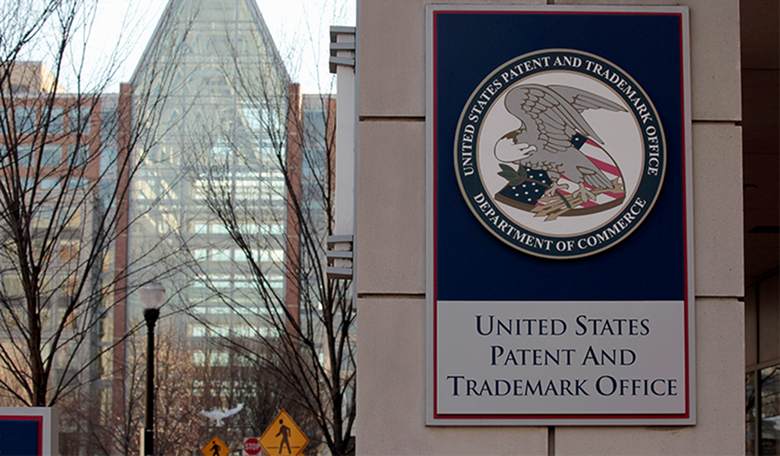
The trillion-dollar world of patents.
It’s a pretty Israeli story. After my first startup went belly up, I kind of freelanced. I did some consulting and patent writing. I had learned to write patents when I had no choice: we got the bill from a local patent office and my partner told me that I had a new job, namely taking care of patents. Two American expats who had a lot of experience in patents and moved to Israel taught me the ropes. Though my first company went out of business when a buyout deal was never consummated, we did have four U.S. patents issued and in force when our Delaware C corporation closed in 2008.
Patents are a tricky thing. On the one hand, they give their owners the right to deny others the ability to manufacture or sell the patented item or method wherever the patent is in force. And patents are only by country. There is really no such thing as an “international patent,” though there is a coordinated filing system created by the Patent Cooperation Treaty or PCT. Patents can get very expensive very quickly. Beyond filing fees, there are office fees as well as translation fees where required. Upkeep fees every couple of years add thousands more to the cost of patents. Elon Musk’s companies file patents, but he makes it his business to allow others to use his inventions for free. I believe that it was he who said that it’s a waste to file patents as a patent just gives the Chinese instructions on how to copy what you are doing. Patents must be detailed enough so that someone reasonably skilled in the relevant field could read the document and create the device or method described. It is therefore hard to hide things while still expecting to receive a patent number. Failing to fully disclose an invention as best practiced at the time of filing a patent application is reason for not receiving a patent or having it thrown out in court.
When my current business partner and I set up our company in 2015, we were focused on the water quality market. We had a simple sensor that could determine in a few seconds if drinking water was contaminated or not. At great expense we patented widely, and at one time held active patents in the U.S., a few European countries, China, Japan, and Australia. While we had devices used in 85 countries and all 50 states — with sales at 4,500 CVS stores — the company never took off. People want water quality information, but our device required that they make an effort to get it. If it were just to show up on their phones, they would be happy. In that direction, we started working on an automatic device that would sit under the sink. We could get it to work remotely for about six months but then it required a replacement of a membrane. How eager would customers be to change a part of the device periodically? We didn’t know.
And then the Gaza War started. My business partner was busy actively fighting and that meant that the continuation of our company was my job. One day while he was heading back to Gaza, we had a call that changed everything. We concluded that while there may be an amazing business in water quality monitoring, we didn’t seem to know how to make money in the field. What else could we do with our sensor? Maybe there could be a more personal use, one that might be of greater interest to a wider audience? I told him to take care of the war and I’d work on a new direction. My first thought was to reinvent the “mood rings” of the 1970s, but every time I tried it, it said that I was angry.
I knew that Apple made its watches primarily as “health” monitors, and the big missing application was glucose concentration. There was pulse, calories, oxygen in blood (which Apple apparently pilfered from another firm who had patents on it), and more. If any watch or similar band could provide reliable glucose data without a skin prick, it could be a true game-changer. I don’t know how many hundreds of finger pricks I made in order to compare traditional Glucose Oxidase readings with our sensor results. And though I spent about a year trying, I could never get a truly consistent correlation between standard blood readings and our sensor’s passive output. But I did notice that if I made a fist, I got a nice reading. And if I opened my fist the signal went from positive to negative. Now this was interesting.
I assumed that I was measuring blood pressure. So I bought a cheap blood pressure monitor. But again there was no correlation between the readings on the device and the behavior of our sensor. But the effect was real and quite reproducible. So after some time we found that our original water sensor could also measure the motion and action of human muscles. It was quite sensitive and very reproducible. So now what?
The first order of business was to modify the sensor for the new applications. We found that it could pretty much identify any human motion, from smiles to legs running. We believe that we have a winner, one that can monitor workouts, record gestures, control digital devices, and train robots for human motion. These developments meant that new patent material was in order. So I filed five “provisional” applications at the U.S. Patent and Trademark Office (USPTO). Provisional patents can never become full, issued patents. Rather, they record a date and give an inventor a timestamp for his invention. If he wants to take advantage of this date, then he needs two things: the provisional patent must be detailed enough that the invention is explained, and he needs to file a full application (at much higher cost) within 12 months of the provisional filing. Every time we had some eureka moment, I fired off another provisional application and did my part to lower the National Debt.
I find it somewhat poetic justice that I filed the full application on Thanksgiving Day. For nearly 30 years, I was able to work with the USPTO. Then in July, the office said that anyone living outside the U.S. must have a recognized patent agent or patent attorney. It was a real bummer at the personal level and also it reflects a major problem at the USPTO. The U.S. is the world powerhouse of invention. For two centuries, the U.S. has been at or near the top of creativity. Since Barack Obama, the office has been trying to change its operating rules to mimic those of a moribund Europe. It’s like a gold-medal runner asking to use the workout program of the guy who came in dead last. Fortunately, I found a Canadian patent agent who does not celebrate Thanksgiving, and for an additional $300, he used his U.S. registration number to file our patent application. On the one hand, I am happy and grateful that we have filed for patent protection. On the other hand, I think that the USPTO’s policy is misguided. An Israeli in the U.S. can file for himself but an American overseas — even one with lots of experience and a dozen issued U.S. patents — needs to have external representation.
No less than Thomas Jefferson wrote some of the original patent laws of the country. U.S. innovation has been the driver for economic success and the amazing standard of living we enjoy today. The poor today have more goodies than the richest of the rich a hundred years ago.
I hope in the next few weeks, you will hear about our company and the technology.