
Israel’s newest submarine is joining the big leagues.
An event occurred recently that received very little press. The first Ohio-Class submarine began the process of being decommissioned. The USS Georgia finished its final patrol as a guided-missile submarine. After 42 years of service and a midlife reactor refit, the Georgia returned home for the last time. One has to note that Georgia and three other boats were converted from 24-missile Trident nuclear ballistic missile platforms into 154-Tomahawk-carrying cruise missile platforms. Twenty-two of twenty-four silos were converted, with each holding seven unique Tomahawks, thus giving an idea of the massive size of a single 59-ton Trident D5 missile. The end of the Georgia’s run marks a significant reduction of available cruise missiles for use by U.S. forces.
Submarines are incredible weapons platforms and allow stealth and flexibility not generally available with any other system. Georgia was a ballistic missile boat but was converted to the cruise missile role when Pentagon planners realized that they could keep the submarine leg of the Nuclear Triad and free up other resources for more conventional warfare. The remaining two Trident silos were generally used for SEAL-related activity.
No other country has the submarine force that the U.S. currently has. Between fast-attack, ballistic missile, and guided missile subs, the U.S. fields around 70 nuclear-powered boats. With their nuclear reactors, they can stay submerged indefinitely and are only limited in underwater endurance by food availability. The Virginia-class fast-attack subs will soon be joined by Ohio’s replacement, the Columbia-class of nuclear ballistic missile subs. They will have 16 nuclear missiles, and their reactors will run for 42 years without need for expensive refueling that took up to three years in dry dock. I wish my car could go so long between visits to the gas station.
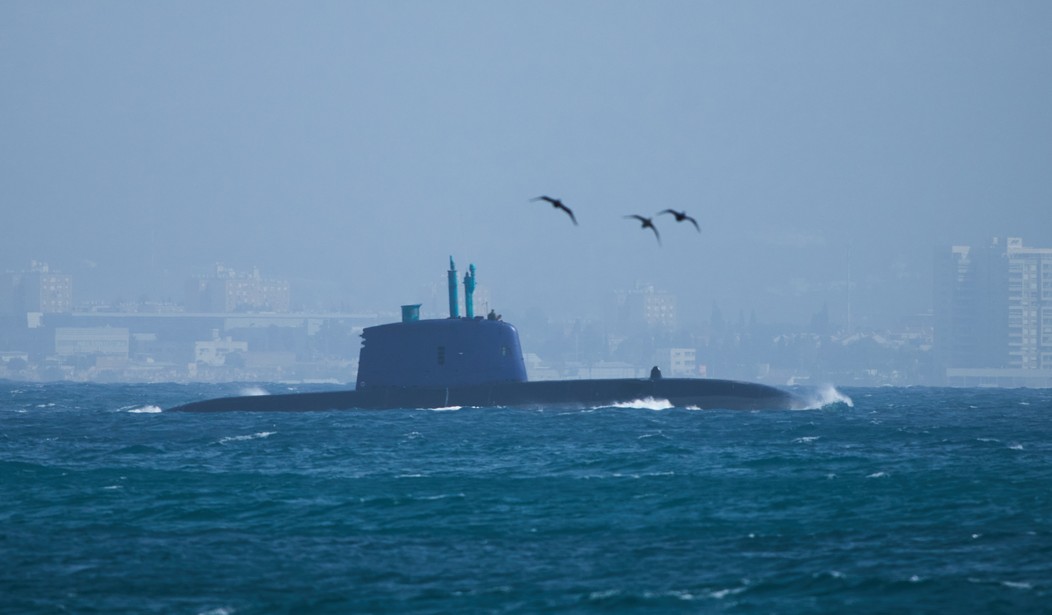
While no country has the size or firepower of the U.S. submarine fleet, other countries do their best to be competitive. Only a handful of countries have submarines with nuclear reactors, and Israel is not one of them. It’s a strange situation that Israel’s submarine fleet is produced by Germany and is essentially the modern continuation of the U-boats of World War II. Israel’s Dolphin Class is considered top of the line for non-nuclear subs. It uses hydrogen fuel cells to run during Air Independent Propulsion (AIP) for extended periods of time without recourse to its diesel engines. The Dolphin subs have been noted for their 10 forward torpedo tubes, with four larger than the standard size. It is assumed that the bigger tubes are for Popeye or other cruise missiles, some of which might be nuclear-tipped. The newest submarine to quietly leave Kiel, Germany, recently and head to Israel is the INS Drakon, and yes, that does sound very close to the word "Dragon." A defining feature of this submarine is an extremely long sail. Some have postulated that Israel has joined the vertical launch system (VLS) missile delivery method used on U.S. boats. The Soviets also had tall sails in the day, as they could not put their missiles fully into the body of their subs, as the Americans traditionally do. The very long sail on the Drakon looks like a normal person wearing Shaq’s very big sneakers.
The Drakon with cruise missiles and possible nuclear warheads would give Israel one additional tool in dealing with Iran and probably soon enough Turkey. The IDF made a very vague statement recently about delivering Naval commandos to the furthest point from Israel ever, where they acted and then returned home. It is assumed that another Dolphin sub brought them to Azerbaijan, from which they entered Iran and performed some military activities before returning to the sub. In World War II, the U.S. often used subs in the Pacific in order to land forces for scouting or demolition. They also played a critical role in picking up airmen who ditched their planes. The Israelis have been tight-lipped about what the Shayet 13 (Israeli SEALs) were up to and where.
When Admiral Hyman Rickover proposed nuclear propulsion for U.S. Navy submarines, the Russians laughed. In their minds, a reactor had to be the size of a building and could never be made small enough to power an underwater vessel. When the Nautilus launched in 1954 and famously announced it was running under nuclear propulsion, the Russians found themselves years behind in the race to dominate the seas. The Russians did produce nuclear-powered vessels, but they had many accidents and problems. The Kursk explosion may be the most famous disaster, though the reactors were apparently shut down successfully and have not released radioactivity. Other accidents were not so clean, and sailors died from radiation poisoning. The USSR never had a Rickover or a safety ethic like the one he imposed on the nuclear navy. Before he was forcibly retired, he used to either go out on sea trials or frequently call subs and surface ships during their shakedown cruises in order to verify the performance of their reactors. He interviewed 18,000 officer candidates for nuclear duty in the Navy. He famously put officer candidate Jimmy Carter in a broom closet when he was not satisfied with the young man’s answers. Rickover advised Carter a good deal, and one can see the two of them together on various occasions, usually on or near a U.S. nuclear submarine.
In technology and war, one would like to sit on his accomplishments but cannot. A USAF A-10 today can put more tonnage of bombs on its wings than World War II B-17s could carry in their bellies. While modern war-fighting systems like F-16s and Ohio-class subs are in service for decades — nearly half a century for each — they are always undergoing upgrades and improvements. The B-52 may finally hang up its spurs after 100 years of service, but there is no question that the bombers today are significantly different and improved from when they rolled out of the Boeing factory 60 years ago. The B-21 Raider is going through its paces now because the B-2, however successful in its Iranian bombing missions, is getting old and in need of an upgrade. The F-47 is on its way, and will it retire the F-16? F-15? F-35? Israel apparently has made good use of the F-35’s stealth features. Many claim that attacks in Iran with the plane allowed for entry without Iranian knowledge. Even a recent attack on an airbase in Syria close to the Turkish border is being attributed to the latest stealth fighter, as Turkey did not respond to — and may not have seen on radar — the approaching Israeli warplanes. It would be nice if one could say that technology is good enough, but in all areas — especially with drones — there is no rest. What was cutting edge last month is now passé. The Drakon apparently is needed for attack possibilities that torpedo-tube-launched cruise missiles cannot address.
Though the Israeli submarine force is minuscule in comparison to its American counterpart, it too shares the ethos of keeping quiet. Every now and then, one might see a Dolphin sub transiting the Suez Canal or leaving port in Eilat. Otherwise, one hears nothing and knows even less. Rickover was the first to make the submarine a true underwater fighting system. World War II boats had to surface to recharge batteries, and many attacks were made with deck guns on the surface. When England still had a proper navy, a submarine captain and destroyer skipper prepared for battle. The submariner said that if U-boats appeared, he would plan to fight on the water’s surface. The destroyer captain said that he hoped to do the same. That wry British humor.
The Israeli AIP system is good for a few weeks submerged, which may be just enough to deal with Iran.
Editor's Note: Do you enjoy Townhall's conservative reporting exposing the radical Left and woke media? Support our work so we can keep bringing you the truth.
Join Townhall VIP and use promo code FIGHT to receive 60% off your membership.