
CNN's data analyst Harry Enten said something interesting last week. He said Republicans have a stubborn habit of outperforming their September polling in the states that decide control of the Senate. He is right, and he reiterated a point I have been making for some time that leads me to believe all might not be lost for the GOP in the Senate.
In the major 2024 races, Republicans outran their September polls by nine points in Iowa, by 6 in Ohio, and by 5 in Michigan. A skeptic will say that was 2024, with President Donald Trump on the ballot. As Harry noted, go back to 2018, the first midterm of Trump's first term, and you get the same pattern. Republicans beat their September polls by six in Iowa, 6 in Ohio, and 8 in Michigan. Across 2016, 2018, 2020 and 2024, Republicans outperformed their September polling by at least five points in every one of those states. The Democratic leads in those same races right now sit under that margin.
The reason is not magic, and it is not fraud. It is who answers the phone. There's an old joke that a CrossFitter, an atheist and a vegan walked into a bar. We know because they made sure everyone knew. Political progressives these days are very much the same way. They want everyone to know they hate the president, they hate the GOP and they are going to vote. Most Trump voters just go to work, go to church, and vote.
Pollsters have struggled to get Republican polling participation. Patrick Ruffini's review of the 538 archive shows polling historically overstating Democrats by 6.2 points in Michigan and 6.4 points in Ohio. Florida's September polling misses by about five points. In Georgia and Texas, the miss is under one point.
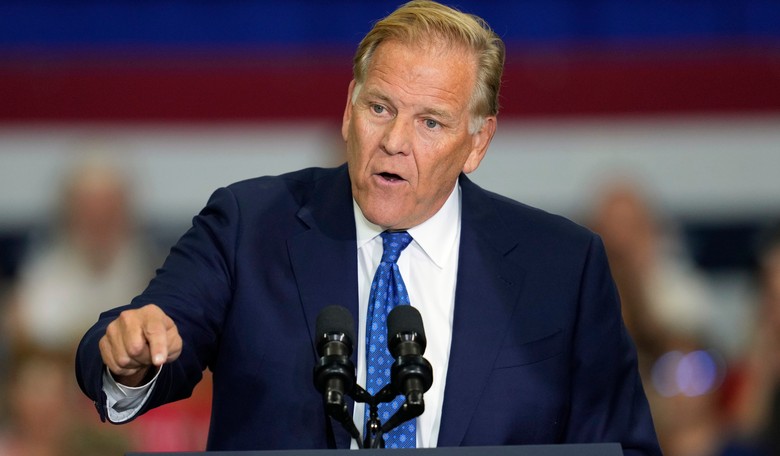
Republicans will outperform their polling again, but probably not by the same margins, because the gap narrows in a second-term midterm. That leaves enough of a cushion for Susan Collins in Maine, who rarely leads a poll and always wins. It is enough for Mike Rogers in Michigan, Ashley Hinson in Iowa, Dan Sullivan in Alaska, Roger Marshall in Kansas and Darlene Graham in South Carolina. It is not enough for Michael Whatley in North Carolina, and it is not enough for Mike Collins in Georgia unless gubernatorial candidate Rick Jackson pulls him across the finish line. Ohio is a coin flip. Sherrod Brown leads Jon Husted by less than the historical six-point margin.
Unfortunately, Texas is a problem Republicans made for themselves. The data shows Ken Paxton is the least popular Republican Senate nominee in any state, and Texas independents cannot stand him. The people who insisted the party line up behind Paxton bought the idea that swing voters no longer exist and elections are won by turning out the base. Pat Dennis, who runs the Democratic group American Bridge, called that conventional wisdom wrong in a way that led both parties into terrible strategic decisions. Dennis is right. If the country is split 50-50 and only three percent of voters are persuadable, those three percent decide every election. Republicans cannot win Texas alone. I still think Paxton pulls it out, but I will not be surprised either way.
The House is a different story. The generic ballot average has Democrats up roughly eight points, or about 6 points adjusted for polling bias. Democrats need a margin of four points to take the House, so they probably will, by 15 to 20 seats. Hakeem Jeffries will likely be speaker. To take the Senate, however, they need to be nine or 10 points up, and they are not there even before you adjust the polls.
I have Republican friends convinced we are losing Mississippi, South Carolina and Texas. I remember when they were sure we would lose Texas with Ted Cruz and South Carolina with Lindsey Graham six years ago. Republicans should be alarmed about the House and honest about their own mistakes in Texas, North Carolina and Georgia. Right now, however, I do not think Democrats should be measuring the drapes in the Senate.