
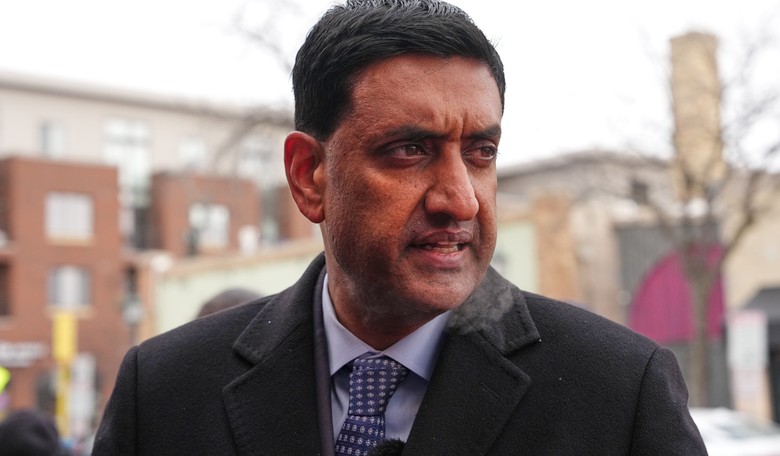
Progressive California Rep. Ro Khanna took to social media Wednesday to lecture President Trump on the new White House Accord on Super Intelligence, declaring that “tech billionaires” cannot be trusted to write rules meant to keep society safe, or protect American jobs. You might be shocked to learn that on that point, he is absolutely right.
But that is not what the president’s latest AI accord does. Rather than handing the government a monopoly over AI safety, it relies on a simpler and more effective safeguard: free-market competition.
I represent a district in Silicon Valley.
— Ro Khanna (@RoKhanna) September 30, 2026
I know the culture. I’ve been in the rooms.
Mr. President, you cannot trust tech billionaires to write the rules to keep us safe or protect our jobs. pic.twitter.com/BaN0BwXNaF
"I represent a district in Silicon Valley. I know the culture. I've been in the rooms. Mr. President, you cannot trust tech billionaires to write the rules to keep us safe or protect our jobs," Rep. Khanna said. "They can build companies. They can build apps. They cannot be given the keys to our democracy."
First, Khanna’s complaint about handing tech CEOs “the keys to our democracy” is especially rich coming from a lawmaker who seems untroubled by AI companies pouring money into lobbying Congress and shaping the very regulations meant to govern them.
Second, Trump’s solution does not hand AI CEOs the keys to anything. It pits them against one another. As xAI CEO Elon Musk put it Tuesday, the leading firms will be “grading each other’s homework,” a framework that forces rivals with enormous technical resources to identify weaknesses, unsafe conduct, and corner-cutting by competitors. Rather than trusting a single company, or a government bureaucracy vulnerable to the very lobbying Khanna ignores, the accord makes safety a competitive necessity.
At the same time, the approach leaves room for emerging AI companies to challenge entrenched leaders such as OpenAI and Anthropic. Those challengers will have every incentive to build safer, more capable, and more controllable systems, not just to win customers, but to distinguish themselves from incumbents that stumble. Some may even develop AI tools designed specifically to detect vulnerabilities, monitor dangerous behavior, and prevent breaches in other AI systems.
But take Rep. Khanna’s preferred route, government-directed AI oversight, and the largest firms, including OpenAI, Anthropic, and xAI, would be best positioned to dictate the rules. They have the money, lawyers, technical staff, and lobbying networks to navigate a regulatory regime that smaller challengers cannot. The result would be the very concentration of power Khanna claims to fear: a small club of AI incumbents enjoying the protection those rules provide from would-be competitors.
That is the central flaw in Khanna’s argument. He warns that Silicon Valley should not hold the keys to democracy, then promotes a system that would hand those keys to Silicon Valley’s largest firms. Trump’s approach, however, relies on a mechanism grounded in reality. Make these companies compete, make them scrutinize one another, and ensure that the next company capable of building a safer AI system has a path to challenge the giants.