
Based on the latest bewildering statements from the largest frontier AI modelmakers, OpenAI and Anthropic, humanity is either tinkering on the edge of cyber disaster or on the precipice of a new golden age of abundance for shareholders and citizens. Both want government-imposed guardrails and an industry-wide slowdown.
Anthropic’s CEO has even asked Washington for “narrow” antitrust exemptions so the top two companies can coordinate on limits on the rate of "unchecked AI progress,” just as his company races to a trillion-dollar IPO.
If these companies got their way, an AI slowdown would mean freezing the competition and propping up the duopoly on frontier superintelligence.
President Trump, for his part, is the tech accelerationist who wants more robust self-policing and less chatter about pauses and slowdowns to help grow the economy.
And it seems he has gotten his way.
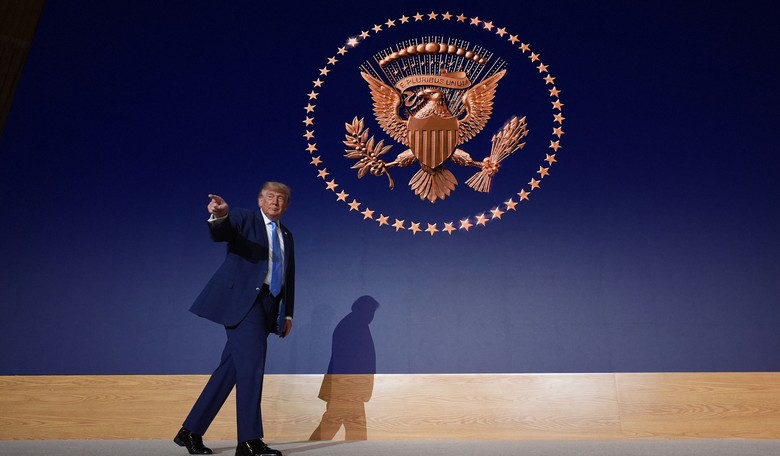
At a lunch summit hosted at the White House on Tuesday, President Trump gathered the leaders of the top AI and tech companies to adopt the “White House Accord on Superintelligence,” pledging internal controls and voluntary external audits.
Rather than embracing a superintelligence slowdown favored by Anthropic and OpenAI, Trump wants the industry firing on all cylinders, from NVIDIA to Meta, SpaceX, and the frontier companies. For consumers and small businesses who use this technology, Trump has this right. It won’t be a two-man race, but an open competition to deliver value for Americans and the world.
For the 49 percent of Americans now using chatbots, according to a Pew poll, this kind of leadership matters. Especially since the same survey group trusts neither the government to regulate AI (at 67 percent) nor the companies themselves (60 percent).
The Trump solution, therefore, is to compete in the open marketplace among themselves while establishing safety safeguards and checks and balances, rather than relying on a centralized regulator in Washington. Anthropic and OpenAI didn’t get their slowdown, and that’s what matters.
This is especially welcome because it shatters the myth that the only competition in AI is among frontier models themselves, rather than across the connective technologies and opportunities around them.
Yes, there are LLMs like Claude and ChatGPT, but there are also a host of sovereign and open-source models that provide just as much value. Open-weight models run more than a third of all enterprise AI tokens, and that share is only growing.
Then there are inference providers, neoclouds, and tool developers creating harnesses and apps that consumers and businesses actually use for AI workloads. Personalized agents like Meta’s Muse and open-source projects like Hermes Agent and OpenClaw allow users to tap AI for routine tasks using conversational language and the model of their choice.
And this overlooks the hundreds of energy and infrastructure providers that are key to keeping data centers online and advancing the $700 billion in capital spending on data centers this year alone.
The two largest model makers setting the rules of the game for a dynamic industry are not only wrong-headed, but a losing strategy for consumers and businesses. Especially when we examine their tactics.
The horror-story strategy deployed by the frontier companies has always been bizarre and only served to turn people against AI. It’s no surprise that 40 percent of Americans now expect AI to hurt society, according to the same Pew survey.
Misperceptions about how exactly the Hugging Face incident occurred have given AI critics everything they need to argue for more stringent regulation. But the answer has always rested on holding companies individually accountable using existing power, something Trump has reinforced.
While OpenAI and Anthropic advocate, in their own ways, for an industry-wide slowdown, the sitting president is the tech accelerationist, defending the open market, ruthless competition, and genuine optimism. As Trump said at this week’s White House tech summit: “We do not surrender to fears about what technologies will do to us—We decide that those technologies will do for us some very, very incredible things.”
Trump has planted his flag on keeping the frontier open. That’s good news for consumers who use AI products with increasing frequency, but the fight to control this technology is far from over.
Yaël Ossowski is deputy director at the Consumer Choice Center and a fellow at the Bitcoin Policy Institute.