
And the hits keep on coming.
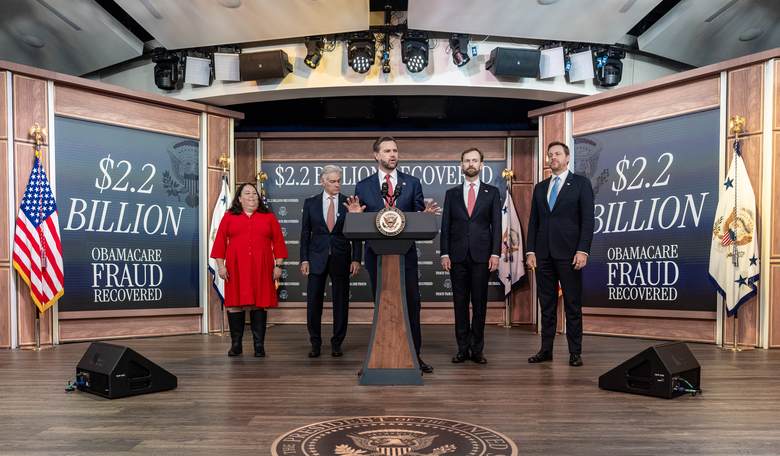
Just days ago, Vice President JD Vance, HHS Director Robert F. Kennedy Jr., and CMS Director Dr. Mehmet Oz cracked down on $2.2 billion worth of taxpayer-funded healthcare waste.
The Trump administration is right to make fighting waste, fraud, and abuse in federal healthcare programs a priority. There are countless billions that are drained of taxpayer money on fraudulent schemes, and it’s why strong enforcement, as we’ve seen with the Justice Department’s recent National Healthcare Fraud takedown, protects taxpayers, supports honest providers, and ensures that public healthcare dollars go toward real care.
But as with any crackdown, the goal should always be to separate the wheat from the chaff, and not to discard what is working alongside what is not.
That danger is especially clear when it comes to remote patient monitoring (RPM), which is already improving access to care for millions of rural patients, and is at risk from a new proposed sweeping rule propelled by unelected bureaucrats inside CMS that would make it harder for doctors to use a service that expands access to care, particularly for rural patients who the administration is fighting for every day.
RPM does exactly as its name implies. It is technology that gives doctors the ability to monitor their patients’ conditions from the comfort of their own homes.
It supports better care for left behind Americans — boosting access while avoiding costly hospitalizations before they become an emergency intervention. In other words, it is the very essence of a MAHA agenda.
To date, RPM has received significant support from the Trump administration and congressional Republicans, who have set aside billions of dollars for smart investments in the Rural Healthcare Transformation Project, which states are already lining up to access. That is because its effectiveness is proven: RPM is responsible for dropping bed days by as much as 70 percent, saving taxpayers countless millions of dollars.
As with any new technology, there are bad actors who will attempt to exploit it as a new avenue to defraud taxpayers, as a Department of Health and Human Services inspector general report shows. Of course, the Trump administration is right to go after them and close those loopholes.
The problem is that the rule change is overly broad and might make it impossible for overwhelmed doctors’ offices to use outside remote patient monitoring companies. Should it be allowed to go into effect as is, it would undercut the president and Congressional Republicans’ own signature achievements in providing greater and better access to healthcare while advancing the latest technology.
This is the wrong approach, and not what President Trump, RFK, or Dr. Oz want. Even worse, cancellation notices for remote patient healthcare could go out to seniors next month, just before the crucial midterm elections, further undermining the president’s priorities.
We shouldn’t be banning a piece of technology that’s a key piece of President Trump’s winning healthcare agenda outright. By targeting only bad actors, we can keep the cost-saving and access-to-care benefits of this free market innovation, all while stopping fraudsters dead in their tracks.
As The Heritage Foundation’s Peter St. Onge put it, “There are ways to do this without undoing the progress Trump’s own administration set in motion in 2019” such as “CMS banning the cold-calling of beneficiaries that’s fueled so much of the abuse or requiring physicians to sign off on every RPM order before any patient is enrolled.” St. Onge is correct, and the Trump cabinet — especially VP Vance, Dr. Oz, and RFK — already understands this principle. Their latest Marketplace crackdown demonstrates the distinction.
For instance, CMS isn't responding to unauthorized Obamacare enrollments by abolishing all insurance brokers. It's a carrot-and-stick approach: ensuring a better free marketplace for good brokers, while identifying questionable enrollments, strengthening verification procedures, and taking action against bad brokers who violate the rules.
That is how you ensure smart program integrity and go after waste, fraud, and abuse: find the vulnerabilities, identify bad actors, and then close any loopholes.
Washington's war on healthcare fraud should remain a war on fraudsters, and not on doctors, affordable healthcare, and certainly not on vulnerable patients in rural America. I have high confidence the administration will do what needs to be done; they have righted the ship when the regulatory class beneath them has veered off course before, and they’ll do it again where needed.
The goal was never to regulate healthcare into submission. It was to drive the fraudsters out of it. That’s a fight worth doing right, and a fight worth finishing.
Ashley Herzog is a freelance healthcare writer for the Heartland Institute