
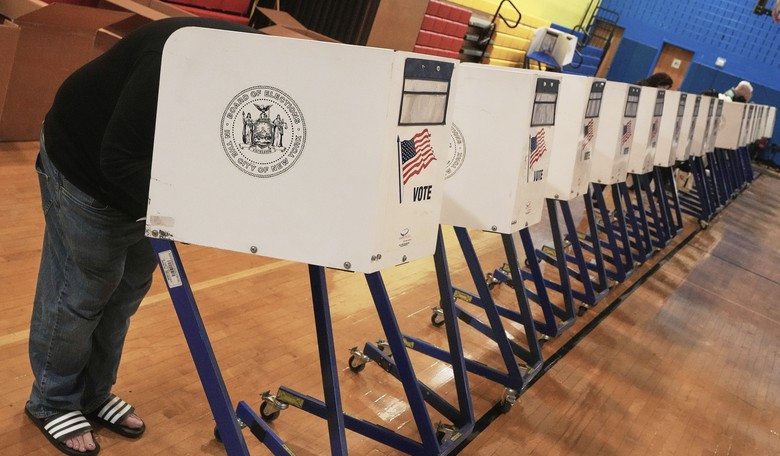
If you're heading to the polls in Wisconsin, you may not know about several state constitutional amendments also on the ballot this November. But it's important to understand what they are and what they'll do for the people of Wisconsin.
Wisconsin voters are currently deciding whether to change Wisconsin's Constitution on issues touching on religion, taxes and race. Three statewide referendums are on the November ballot. https://t.co/1KBM8V2XcA
— FOX6 News (@fox6now) September 22, 2026
The first referendum would address whether or not the Governor has the power to create, increase, or authorize any tax or fee.
The full text reads:
QUESTION 1: Partial veto. Shall section 10 (1) (c) of article V of the constitution be amended to prohibit the governor, in exercising his or her partial veto authority, from creating or increasing or authorizing the creation or increase of any tax or fee?
This stems from Gov. Tony Evers' misuse of the line-item veto to codify a 400-year property tax increase. Using his veto power, Evers changed text that increased school funding for the 2023/2024 and 2024/2025 school years by turning "2025" into "2425." That move has led to the highest property tax levy jump in the state in 20 years.
This amendment would ban governors from using the veto power to create or increase a fee or tax moving forward.
Republican Tom Tiffany has vowed to end the 400-year tax hike if he's elected governor.
The second proposed amendment would ban the state and local governments from closing churches and other places of worship during a state of emergency. This was prompted by the COVID lockdowns in 2020, when Gov. Evers issued an ongoing state of emergency that shut down nonessential businesses and places of worship.
The full text of that amendment reads:
"QUESTION 2: Freedom to gather in places of worship during an emergency. Shall section 18 of article I of the constitution, which deals with religious liberty, be amended to prohibit the state or a political subdivision of the state from ordering the closure of, or forbidding gatherings in, places of worship in response to a state of emergency, including a public health emergency?"
The Wisconsin Supreme Court eventually ended his state of emergency, deeming it unconstitutional.
The third proposed amendment would ban affirmative action and bar the state from giving preferential treatment to or discriminating against someone based on race, sex, color, ethnicity, or national origin. This would apply to government jobs, contracts, and public education.
That proposed amendment reads:
"Governmental entity discrimination prohibited. Shall section 27 of article I of the constitution be created to prohibit governmental entities in the state from discriminating against, or granting preferential treatment to, any individual or group on the basis of race, sex, color, ethnicity, or national origin in public employment, public education, public contracting, or public administration?"
"I call this constitutional amendment the equality amendment, because what it does is it restores merit, fairness and equality to government practices in Wisconsin all the way from the state capital all the way down to our school boards and everything in between," State Rep. David Murphy said to Fox 6 News.
At least 5,600 absentee ballots have already been returned of the 285,000 mailed to voters. The legislature had to approve the amendments twice during two consecutive two-year sessions. Voters will have the last word on the amendments, and Gov. Evers cannot veto them if they pass.