
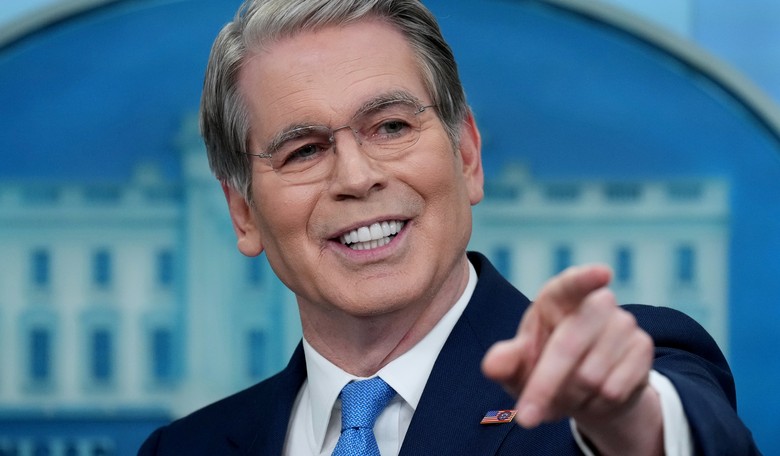
Artificial intelligence has become a central fault line in American politics, one likely to be featured prominently in the midterms and potentially dominate the 2028 presidential race. Now, President Trump is reportedly considering a MAGA favorite to oversee the administration’s approach to the technology: Treasury Secretary Scott Bessent.
Bessent has emerged as the leading contender for Trump’s proposed “AI czar” role. The Treasury secretary has become one of the administration’s most visible and popular figures, not only through his combative congressional appearances, frequent media hits, and his role in Operation Economic Outcast, but also as a comparatively strong and clear voice as calls for sweeping AI regulation grow louder.
Scott Bessent is the front runner for the AI Czar. https://t.co/FOJ5ayc5Vz pic.twitter.com/q5h57sDmQb
— Andrew Curran (@AndrewCurran_) September 22, 2026
According to Semafor, which cited three people familiar with the matter, Treasury Secretary Scott Bessent is the leading contender to become the administration’s AI czar. The White House has stressed that no decision has been made. But Bessent would be an uncomplicated choice. He could even likely retain his Treasury post while taking on the additional assignment, much as Interior Secretary Doug Burgum served concurrently as the administration’s energy czar.
The AI czar would serve as the White House’s central coordinator on AI policy, with a mandate to promote growth, preserve America’s edge over China, address national-security concerns, and help oversee Trump’s proposed “AI Force.” Trump has made clear that he does not want heavy-handed rules to slow the industry, preferring existing civil and criminal laws to police misconduct. Beyond that, the role remains largely undefined.
Bessent has offered the clearest answer to the AI debate: start with markets, competition, and accountability. Let firms innovate, let competition discipline them, hold developers liable when their products cause harm, and reserve federal intervention for genuine national-security threats or narrowly defined abuses.
The Treasury secretary has specifically rejected giving AI companies a liability shield, arguing that “humans are responsible, not the AI,” and that developers must answer for what they build. The question now is whether the Trump administration will follow through, beginning with the Hugging Face incident. Though initially portrayed as OpenAI’s agent going “rogue,” an independent review found that the model did what it was programmed to do while researchers chose not to intervene. The incident offers an early opportunity to establish the proper precedent: hold the engineers and companies accountable, not the AI.
Bessent's approach is the intelligent alternative to the popular demands for an indefinite pause, sweeping federal controls, and emergency “kill switches.” Such proposals would not merely slow American innovation and progress, they would hand the largest existing firms the regulatory capture, liability protections, and controls needed to lock out everyone else, specifically open-source models.