
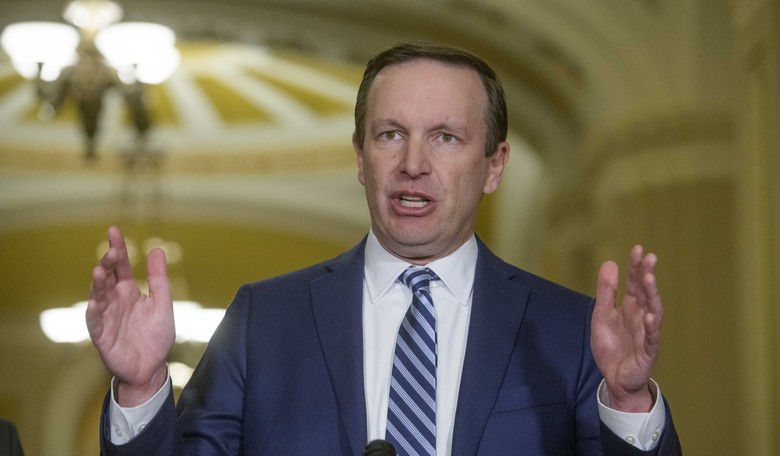
Connecticut Sen. Chris Murphy has renewed calls for censorship, arguing on Jennifer Welch’s podcast that government needs to set rules that make “people feel more powerful.” Murphy pointed to minimum-wage laws, rebuilding “healthy institutions” in local communities, and “regulating the internet” as central government projects. Never mind that the opposite is true.
Murphy went on to explain that a central purpose of internet regulation would be making Americans less likely to “fall for a bulls**t demagogue like Donald Trump,” a remarkably open admission that his goal is censorship, using government power to shape what voters see, hear, and believe.
Senator Chris Murphy to Jennifer Welch: Government needs to regulate social media so people are less likely to support a candidate like President Trump.
— Andrew Kolvet (@AndrewKolvet) September 21, 2026
The left will censor your speech as soon as they have the power to do so. They're not hiding the ball here.
They did it…
"And so government should build a set of rules in which people feel more powerful," Sen. Murphy said. "That's why the minimum wage is so important, and people feel more connected. That's why rebuilding healthy institutions in your town should be a project that government is involved in. That's why regulating the internet so that you're spending less time alone on Instagram should be an important government project."
"And if people are feeling more powerful and less lonely, then they are gonna be less likely to fall for a bulls**t demagogue like Donald Trump," he said. "And so my book is about how do you rebuild a sense of connectedness to your neighbors, a sense of power in your life so that it becomes a prophylactic to demagogues like Donald Trump."
A crucial point to note is that each policy Murphy invokes follows a familiar progressive pattern: the intent is to empower ordinary people, while the result, and the people forced to live with it, be damned.
His remarks about regulating the internet to prevent another Trump-like rise are even more revealing. Murphy has effectively embraced the notion that a U.S. senator’s role includes managing what Americans see, hear, and believe, an astonishing admission from an elected official in a country built on individual liberty and free expression. And it is precisely this instinct that helped fuel Trump’s rise in the first place.
Americans, particularly those on the right, have never taken kindly to government officials deciding what they should think, what information they may encounter, or which political choices are acceptable. Apparently, Murphy’s answer to that lesson is more of the same.