
Maya Angelou's old rule still holds: when someone shows you who they are, believe them the first time. Two former Democratic insiders showed us exactly who runs their party's machinery this week, and most of the press answered with a shrug.
Jake Altman, a former executive board member of the Democratic Socialists of America's (DSA) Boston chapter, told Fox News he walked because the group started sounding like the "extreme groups on the Left" he'd joined DSA to avoid. The same week, former Democratic National Committee fundraiser Lindy Li told Fox News that Kamala Harris ran a "charade" on major donors days before Joe Biden dropped out of the 2024 race, assuring them Biden would stay in while quietly courting the same donors for herself. Different corners of the party, same story: a leadership class that manages the narrative and freezes out anyone who won't play along.
I've spent 15 years as a designated expert witness in fiduciary duty litigation, testifying in federal and state courts about what happens when insiders conceal material facts from the people who trust them. The pattern never changes. Somebody in charge knows something the principal doesn't and manages the information flow to protect their own position. What Altman and Li describe is a breach of the duty of candor, applied to a party instead of a trust account, with voters as the shortchanged beneficiaries.
Altman's account carries the kind of checkable detail that separates testimony from talking points. He points to the 2017 resignation of DSA committee member Danny Fetonte after members learned of his past work for a Texas police union, and a 2019 internal fight in which he pushed DSA to denounce Nicolás Maduro and watched the group defend him instead. His verdict: "dissident voices have been silenced," and most of the dissidents left. That's an organization running on loyalty tests, the same mechanism I've watched sink family businesses and investment partnerships when a founder can't absorb a correction.
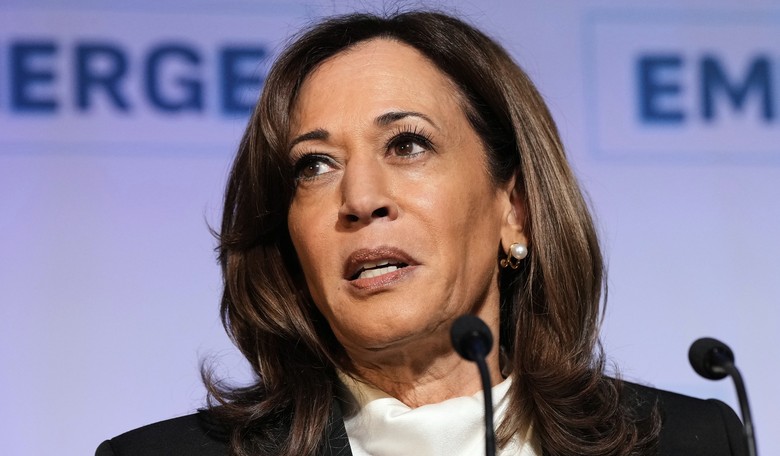
Li's account runs the identical play at a higher altitude. She says Harris told donors point blank there was no daylight between her and Biden, then launched a "charm offensive" on that same donor list the moment he stepped aside. Li calls the environment a cult, one where asking where the money went got you frozen out. I've watched fund managers handle skeptical limited partners the same way. The tactic isn't new. It's just rarely aimed at an entire presidential campaign.
Skeptics will note that Altman has one grievance and Li has a book to sell, so the incentive deserves scrutiny alongside the testimony. Fair, and I'd say the same to a jury. But testimony strengthens when independent witnesses with no relationship to each other describe the same conduct from different vantage points. Joe Manchin left the party in 2024 over partisanship that crowded out the middle. Kyrsten Sinema did the same in 2022, citing party-line pressure over independent judgment. Andrew Yang quit in 2021 and started the Forward Party over a two-party incentive structure he'd concluded was broken. Tulsi Gabbard left the same year, calling the party an "elitist cabal" answering to ideologues instead of voters. Robert F. Kennedy Jr. and Elon Musk, a career Democratic donor, both walked for reasons ranging from health orthodoxy to censorship, and both describe the identical mechanism: raise the wrong question, get managed out.
Here's where the press's selective appetite for transformation stories shows itself. A personal transition earns a sympathetic profile in every outlet with a pulse. A hardened DSA board member or a top-tier fundraiser describing a machine that freezes out dissent gets newsroom silence dressed up as balance. That's not journalism. That's choosing which whistles get blown.
None of this makes every defector right about everything. Li's claim about a rigged internal poll ranking Harris last among potential replacements remains an allegation, not a document, and a fair reader holds it at that level until one surfaces. But the pattern across Altman, Li, Manchin, Sinema, Yang, and Gabbard isn't coincidence or partisan spin. It's a consistent account, from people who had every incentive to stay quiet and cash in on loyalty instead, describing an institution built to manage appearances rather than earn trust.
Angelou's rule cuts both ways. When a party's own former insiders keep showing you the same mechanism, from the ward level to the West Wing, the honest response is to stop assuming exaggeration and start asking why so many are saying it at once. That's not a hunch. It's a pattern of material nondisclosure, and the remedy starts the moment the people who used to guard the secrets decide they're done guarding them.
Jay Rogers is a financial professional with more than 30 years of experience in private equity, private credit, hedge funds, and wealth management. He has a BS in criminal justice from Northeastern University and has completed postgraduate studies at UCLA, UPenn, and Harvard. He writes about issues in finance, constitutional law, national security, human nature, and public policy.