
One of the primary tenets of the American legal system is the importance of precedent; the common law doctrine of "stare decisis" means "to stand by things decided." The purpose of law in such a system is to provide stability and predictability, so that people can conform their conduct to the law's requirements.
Another way of describing this is "the rule of law." At its core, the rule of law in this country means that all individuals and entities, including the government, are subject to the same laws, which will be applied fairly, consistently and uniformly. This principle is at the very foundation of the U.S. government and legal system.
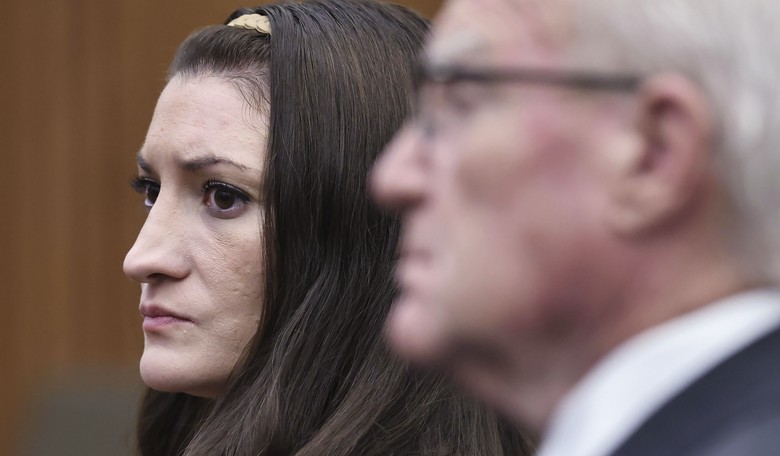
The importance of the rule of law is one of the reasons the mistrial in the Lindsay Clancy trial continues to create shockwaves. Eleven of the 12 jurors voted to acquit Clancy of murder, even though Clancy killed her three small children.
In one of her many recent interviews, Clancy juror Paula Devlin said that she and the other women on the jury saw the case as an opportunity "to make it better for other women in the future." "Justice for those children," she said, "is this never happening again."
Those are manifestly incorrect statements. The jurors in the Clancy case have no control over whether some other woman someplace else kills her children. Making things "better for other women" was not their job. Nor was it their job to make sure that Clancy "gets the help she needs." Their job — their only job — was determining whether Clancy knew right from wrong when she committed those acts.
That — not some notion of female activism — was what "justice for those children" demanded.
Devlin was also the person who "outed" the juror who would not vote to acquit Clancy, by revealing to Gayle King on "CBS Mornings" that the lone holdout was one of three men and the only black person on the jury. That man has since been under vicious and relentless attack on traditional and social media.
That juror made his decision based on his evaluation of the evidence. He decided that Clancy knew what she was doing and was therefore guilty. He had that right, just as any juror in a criminal case does.
The jurors who have given interviews have spent an inordinate amount of time discussing their feelings. That is irrelevant. If a jury's verdict is based not upon what the law is but upon "feelings," then the result in any given case will depend on whose deciding the case and how you can make them "feel," not on the facts and what the law requires.
That is unpredictable. It is subject to enormous abuse. It is a recipe for chaos. And yet it seems to be a common modus operandi for women.
Earlier this week, I was reading a law review article written in 2019 by attorney Samantha Harris and Brooklyn College professor K.C. Johnson. Titled "Campus Courts in Court," the authors analyzed hundreds of cases brought by students who had been accused of sexual assault at colleges and universities, and who later sued, claiming that their constitutional rights had been violated.
The schools were reacting to the 2011 "Dear Colleague" letter from the Obama administration's Department of Education, threatening all institutions of higher education with loss of their Title IX funds unless they took dramatic steps to curb "rape culture" on college campuses. Panicky schools lowered the burden of proof in sexual assault cases from "clear and convincing" evidence to "a mere preponderance" of the evidence, effectively eliminated the presumption of innocence of the accused, forbade legal representation and the rights of the accused students to cross-examine the student's accuser, and permitted the accusers to appeal if a disciplinary tribunal exonerated the accused. Under those conditions, an accusation of sexual assault was tantamount to a finding of guilt. Accused students lost scholarships and were expelled with stains on their academic record that left them unable to enroll in other schools and affected their future employability.
In short, it was a due process nightmare, and the subsequent litigation exploded. By the time Harris and Johnson published their article, more than 500 cases had been filed against colleges and universities (with hundreds more since); the defendant institutions lost — or settled — most of them. Legal expert Gary Pavela was quoted saying, "In over 20 years of reviewing higher education law cases, I've never seen such a string of legal setbacks for universities, both public and private, in student conduct cases. Something is going seriously wrong."
Interestingly, Harris and Johnson reported that the results in cases tried in federal courts did not depend on politics; there was no statistical correlation between the outcome of the cases and whether the judges had been appointed by a Democrat or a Republican president.
But there was a demonstrable difference based upon the sex of the judge. Male federal judges found in favor of the student plaintiffs in 53 percent of the cases. But female federal judges decided in favor of the defending institutions and against the accused students — who were almost all men — in 67 percent of the cases.
I am a woman who has been an attorney for 40 years. And yet I now find myself wondering whether women are cut out for decision-making roles in the legal profession — serving as judges or on juries — because distressingly large numbers appear to be unable (or unwilling) to put their personal feelings aside and decide the case according to what the law is — not "to send a message," to "show compassion" or "to make things better for all women."
Applying the law as it is, is difficult and lonely work. It sometimes produces results that are deeply unsatisfying, and it will rarely make you popular. You must be willing to consider not only the impact of your decision in this particular case, but the longer-term implications — the precedential effect. If a primary motivation for your actions is what other people think of you, how decisions make you feel about yourself, or how something is going to play on social media, you are ill-suited for the job.
In short, it takes not only intellectual integrity and a clear-headed understanding of human nature, but also vision and courage.
In truth, however, those attributes seem to be in short supply among women and men in leadership roles, in the legal profession and elsewhere. We live, increasingly, in a culture where "truth" is a matter of opinion, "science" is whatever someone needs it to be to advance their agenda, and "right" and "wrong" don't exist, except to the extent that you can whip up an irate consensus among your ill-informed followers on TikTok.
The American legal system as we have known it cannot survive that.
Our second president, John Adams, once wrote that "the rule of law" in the United States means that ours is "a government of laws and not of men."
Or women.