
Three dates.
One month.
September 10.
September 11.
October 7.
I wish they had nothing to do with each other.
They do.
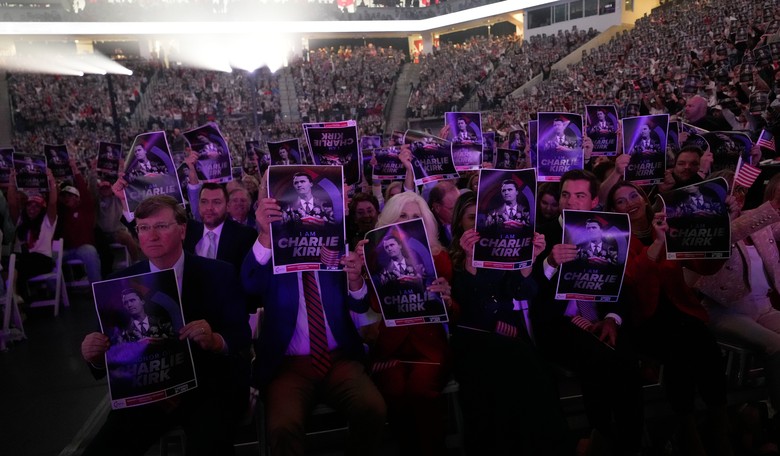
Today marks one year since Charlie Kirk was shot dead on a college campus in Utah. He was sitting under a tent, doing what Charlie did — taking questions, arguing his case, trying to persuade people who frequently didn’t agree with him.
Then a bullet ended the conversation.
Tomorrow is September 11.
Twenty-five years.
I still don’t know how that’s possible.
Nearly 3,000 people went to work, boarded airplanes, reported for duty, dropped kids at school, kissed spouses goodbye, and started an ordinary Tuesday morning.
Nineteen terrorists decided they wouldn’t get to finish it.
Then, less than a month from now, October 7.
Israel.
Families asleep in their homes. Young people at a music festival. Children. Grandparents. Entire families.
Hamas came across the border and slaughtered them.
Different killers.
Different places.
Different circumstances.
Same appetite.
Hatred eventually wants blood.
That’s the thing I can’t get away from as these three dates arrive almost on top of one another.
For 25 years, America and its allies have tried to defeat this kind of evil with armies, intelligence agencies, drones, special operators, sanctions, prisons, and an astonishing amount of money.
Some of it worked.
Some of it didn’t.
We’ve gotten very good at killing terrorists.
We have not figured out how to kill terrorism.
There’s a difference.
And now Charlie’s death adds something uncomfortable to this month of remembrance.
Because the longer Charlie lived, the more plainly he talked about Jesus Christ.
Not Christianity as a voting bloc.
Not faith as a clever way to win an argument.
Jesus.
The Gospel.
Sin.
Repentance.
Forgiveness.
Salvation.
Charlie believed the answer to what was eating away at young people was ultimately spiritual.
I’m increasingly convinced he was right.
You know what every murderer needs before he boards an airplane, crosses a border, or pulls a trigger?
A heart willing to do it.
We can find the bomb.
We can arrest the terrorist.
We can shoot the gunman.
We can blow up the weapons depot.
Sometimes we absolutely should.
But none of those things answers the question underneath all of this:
What makes a human being decide somebody else needs to die?
Hatred.
Grievance.
Humiliation.
Envy.
Rage.
Sometimes religion twisted into something demonic.
Sometimes politics becomes religion.
Sometimes a young man sits alone long enough with his anger that killing somebody starts to feel like purpose.
And then somebody gives him a target.
The Jew.
The American.
The conservative.
The infidel.
The person across the political aisle.
The person responsible for everything wrong with your life.
Kill him, and something gets fixed.
Except it never does.
September 11 didn’t fix anything.
October 7 didn’t liberate anybody.
Charlie Kirk’s murder didn’t defeat an argument.
It just produced more graves.
And this is where I keep coming back to the Gospel.
The Gospel says something radically different.
You don’t need somebody else’s blood.
The blood has already been shed.
No further blood required.
That’s the Cross.
Think about how completely backward that is from virtually every ideology built on grievance.
Grievance says somebody owes you.
Jesus says forgive.
Hatred says destroy your enemy.
Jesus says love him.
Pride says you’re righteous and they’re evil.
The Gospel says you’re a sinner too.
And where death says this is the final word, an empty tomb says it isn’t.
I know.
That sounds ridiculously simple sitting next to fighter jets and intelligence briefings and aircraft carriers.
I don’t think it is.
Because bombs can destroy a terrorist training camp.
They can’t make somebody stop hating.
A prison can contain a murderer.
It can’t make him forgive.
A government can watch a border.
It can’t stand guard over a human heart.
The Gospel goes there.
And Christians should, too.
That’s where I think we’ve sometimes failed.
We’ve become very good at identifying what’s wrong with the world.
I’m certainly guilty of it.
Turn on my radio show any afternoon, and I’ll happily give you a list.
But identifying darkness isn’t the same thing as bringing light into it.
There are angry young men all over this country right now.
Some are lonely.
Some don’t know their fathers.
Some spend more time talking to strangers through a screen than sitting across a table from someone who knows their name.
Some have been taught that their misery is somebody else’s fault.
An algorithm is more than happy to tell them who.
What if we got there first?
What if a church knew his name?
What if a man twenty years older noticed he was disappearing?
What if somebody invited him to dinner?
What if somebody told him that his life has purpose before somebody online told him his purpose was revenge?
What if somebody introduced him to Jesus?
That’s not weakness.
That’s war.
Different weapons.
And yes, when evil shows up with a gun, stop it.
When terrorists cross a border to murder families, destroy their ability to do it again.
When somebody is plotting to fly an airplane into a building, I want every intelligence asset we possess finding him before he gets near the airport.
Christianity isn’t pacifism-by-slogan.
Evil is real.
Sometimes evil has to be confronted with force.
But after 25 years, surely we’ve learned this much:
Killing an evil man and defeating the evil that made him are not the same thing.
One requires power.
The other requires transformation.
September 11 should have taught us that.
October 7 should have reminded us.
And now September 10 has given me another reason to think about it.
Charlie spent his last years telling young people that politics couldn’t save them.
Christ could.
Then somebody killed him for sitting down and talking.
There’s something almost unbearably sad about that.
But there’s also something instructive.
The bullet stopped Charlie’s voice.
It didn’t make him wrong.
So maybe this month shouldn’t merely be a month when we remember the dead.
Maybe it should remind the living what we’re supposed to be doing.
Remember September 10.
Remember September 11.
Remember October 7.
Remember the people who never came home.
Remember what hatred eventually does when nobody interrupts it.
And then interrupt it.
Find the lonely kid.
Call the friend who’s disappearing.
Invite somebody to church.
Have the argument without hating the person.
Tell the truth.
Forgive somebody.
Preach Christ.
Do it again tomorrow.
And the day after that.
We’ve tried for 25 years to make the world safer from evil.
We should keep trying.
But maybe it’s long past time we got considerably more serious about making fewer hearts available to it.
Evil isn’t taking a day off to mourn what it’s already done.
Neither can we.