
My generation – Gen X – was pretty lucky. We grew up in the aftermath of the Baby Boomers and the Greatest Generation, which had built the middle class by rebuilding the world after World War II. It made sense that we would have had the greatest economy the world ever saw; we were the only first-world nation of size and entrepreneurial spirit with the capacity to provide the materials needed to provide what was needed for a world flattened by bombs to rise up again. We did it, and we benefitted from it.
The result was our country and economy booming in ways that seemed impossible. Over the years, we’ve lost some of that edge, as other countries worked hard to catch us in certain fields, but overall we’ve remained on top. We don’t dominate in real terms as we did, but we still dominate.
As a generation growing up in that world, our country did just fine. My family didn’t have a lot of money – my mother was disabled, and neither of my parents graduated high school. They had five kids; the youngest is me, and they managed to survive just fine. Only later did I realize how tight things were with money, or must have been, which is a testament to my dad’s willingness to work two jobs year-round and my mom’s ability to budget and clip coupons. She seemed to make at least a buck and a half out of every dollar; it was something to behold.
Where I grew up, that was the norm, so it seemed ordinary. We were sheltered from the financial realities of lower-middle-class life by parents who didn’t even consider the prospect of burdening children with that information. Were you really “poor” if you didn’t know it, and didn’t know what you didn’t have? Pre-Internet, it was possible to be wildly happy because you had a good family that loved you and friends to play with. There was no reality television to show you what you didn’t know you were missing.
Our generation didn’t suffer in the sense that there was no Vietnam or Kennedy assassination, no national tragedy to rally against or bring a feeling of unsafeness. The Challenger explosion was a moment people remember where they were, if they were old enough, but we weren’t going to fly in a Space Shuttle anyway, so the tragedy was very localized, if that makes sense.
We did have the first Gulf War, and the build-up to that was a lot about “What about the prospect of a draft?” Those discussions were mainly to scare people and turn public sentiment against President George H.W. Bush, but it didn’t really matter, as the war was over so quickly that it wasn't much of a memory.
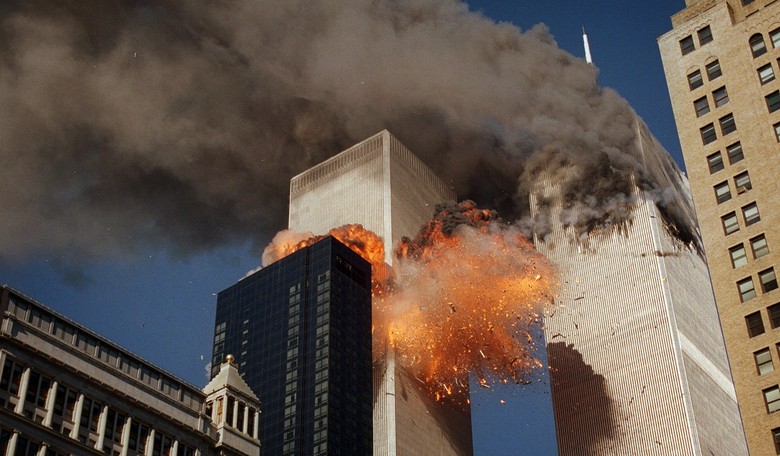
As a generation, we’d led a fairly charmed existence...until that Tuesday in September 2001.
I’d just moved to D.C. in May after graduation, worked two blocks from the Capitol at the Heritage Foundation, and never even imagined anything like what happened was possible. I remember the anger. I was in Baltimore that day, where I lived, for a conference I left upon hearing of the first plane. I had no business at the conference; it was just a way to stay home for a day and hang out with friends who did have reasons to be there. My boss indulged me, so I got to go.
I went home and am not sure I blinked, let alone slept, for the next few days.
On top of the anger was the sense of frustration. Trains were shut down, and I didn’t own a car. I wanted to go to DC to “do something,” even though there was nothing I could have done. That feeling didn’t fade as the days passed – it was like being ready to run while you were sinking in mud. No one knew what to do because what had been done seemed so foreign.
In the weeks that followed, the absence of planes in the sky stuck out – you don’t realize they’re even there until they aren’t. The fighter jets circling DC and birds were all you saw when you looked up. Everywhere else you looked, you saw vulnerability.
If you weren’t alive or old enough to remember it, you can’t have it explained to you in a way that will ever have you understand it. That’s how so many on the left are able to downplay it, to play that “what about the backlash?” game.
The backlash never came, but it gave the left an out to avoid the realities of that day, and it still does so to this day. It gave the left the first of many paths it took to downplay that day, the monsters that did it, and the evil interpretation of “faith” that inspired and covered for it.
It’s been 25 years, but it still feels like yesterday. Don’t be mad at young people who don’t understand it; show them the footage and explain it to them. They will never get it any more than you’ll ever understand what hearing about Pearl Harbor was like or the Kennedy assassination. All you can do is offer a counter to the lies of Democrats and hope it sticks, so the anti-Americanism that is now the currency of the left is rendered as useless as their policies have proven to be.
That we will never forget goes without saying, but we have to actively remember on behalf of those Americans stolen from us on that day so the enemies of America never win.
Derek Hunter is the host of the Derek Hunter Show on WMAL in Washington, D.C., and has a free daily podcast (subscribe!) and author of the book, Outrage, INC., which exposes how liberals use fear and hatred to manipulate the masses, and host of the weekly “Week in F*cking Review” podcast, where the news is spoken about the way it deserves to be. Follow him on X at @DerekAHunter.