
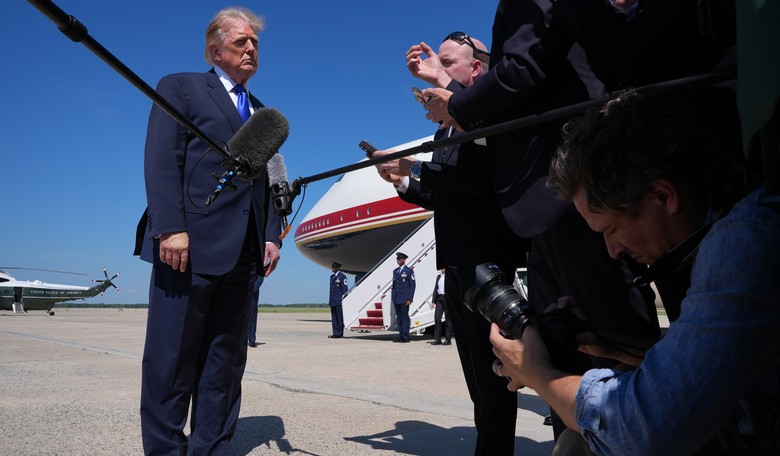
As America approaches the 2026 midterm elections, President Donald Trump's second administration can be described in one word: consequential. Whether one considers those consequences beneficial or dangerous depends largely on where one stands politically. But even Trump's fiercest critics must concede that he has never confused the presidency with a ceremonial assignment.
Trump does not merely enter a room; he occupies it. He governs the same way.
In less than two years, he has reordered Washington's priorities around border enforcement, energy production, tariffs, deregulation, government efficiency and an unapologetic assertion of American power. Supporters see a president keeping promises that establishment politicians spent decades avoiding. Critics see an executive testing constitutional limits while demanding loyalty from institutions designed to remain independent.
Both perceptions contain some truth.
Trump deserves credit for recognizing that millions of Americans felt abandoned by the people governing them. Working-class voters watched factories disappear, communities deteriorate and illegal immigration grow while Washington offered speeches, studies and excuses. Trump understood their frustration before many politicians understood that it existed. His return to office was not simply a personal victory; it was a revolt against a political class that too often appeared more comfortable explaining people's suffering than solving it.
His border policies brought seriousness to an issue Washington had allowed to become chaotic. A nation has both the right and obligation to enforce its laws and determine who enters. Trump also restored energy, manufacturing and national sovereignty to the center of economic debate. His pressure on allies to carry more of their defense burden reflected a legitimate frustration: Partnership should not mean America pays the bill while everyone else orders dessert.
Yet strength without restraint can become excess.
Immigration enforcement loses moral legitimacy when necessary distinctions disappear between dangerous criminals and peaceful families, between securing the border and humiliating people. Americans may support deporting violent offenders while recoiling from enforcement that appears indiscriminate or needlessly cruel. Government must enforce the law, but it must never forget the human beings standing before it.
The economic record is similarly mixed. Growth has continued, but at a modest pace; real GDP increased at a 1.5 percent annual rate in the second quarter of 2026. Many Americans remain frustrated by living costs, and Trump's approval has suffered as economic anxiety persists.
Tariffs may encourage domestic production and force trading partners to negotiate more fairly. But tariffs are not magic checks mailed by foreign governments. Their costs can reach American businesses and consumers. Trump is correct that free trade was often less free and fair than advertised. He is wrong if he assumes disruption alone constitutes a strategy.
Then there is the national debt. Republicans cannot preach fiscal discipline during Democratic administrations and discover amnesia when their own party governs. Tax reductions can promote growth, and waste should be eliminated, but arithmetic is stubbornly bipartisan. The debt does not care which party's talking points created it.
Trump's foreign policy has displayed the same combination of clarity and volatility. He understands deterrence, rejects endless diplomatic theater and recognizes that adversaries exploit weakness. Yet military strength must serve defined objectives. America should neither apologize for its power nor wander into conflicts without explaining the mission, cost and exit. A commander in chief must know when to strike, when to negotiate and when national pride is disguising strategic confusion.
The greatest concern, however, is not any single policy. It is Trump's relationship with power.
A president may be elected by the people, but he is still constrained by law, courts, Congress and the Constitution. Those institutions are not irritants placed in his path; they are the guardrails protecting every American, including his supporters. Executive orders can produce speed, but speed is not always statesmanship. Sometimes the Constitution moves slowly because liberty requires deliberation.
Democrats, meanwhile, must resist treating every Trump statement as the final scene of civilization. When everything is called "fascism," the word loses its meaning. Outrage is not an agenda, and contempt for Trump's voters is not a substitute for persuading them. The party cannot win merely by promising to return America to the afternoon before Trump descended the escalator.
Republicans face their own moral test. Loyalty should never require silence. If they applaud every success and excuse every excess, they become attendants to power rather than guardians of principle. Trump needs honest allies more than obedient admirers. No president benefits from a room in which everyone is afraid to say, "Mr. President, this is a bad idea."
The midterms should not become another national nervous breakdown. They should be an accountability report.
Voters must ask: Are their communities safer? Are their wages keeping pace with costs? Is the border secure, and enforcement humane? Is America respected abroad without becoming trapped in new wars? Is government more efficient? Are constitutional restraints stronger or weaker? And has the president used his influence to unite the country or merely to dominate its attention?
The first two years of Trump's second term have reminded Washington that forgotten Americans cannot be ignored without consequence. They have also reminded Americans that disruption is a tool, not a governing philosophy.
Trump remains bold, instinctive, funny, combative, unpredictable and utterly incapable of becoming background music. But history will not judge him by the size of his rallies, the sharpness of his insults or how thoroughly he dominated the news. It will judge whether his power strengthened the nation, protected liberty and improved the lives of the people who entrusted him with it.
That is the moral question before the country in 2026. Not whether we love Trump or hate him, but whether America is becoming stronger, freer, more prosperous and more decent under his leadership.
The midterms are where the people deliver their answer.
Armstrong Williams is manager — sole owner of Howard Stirk Holdings I & II Broadcast Television Stations and the 2016 Multicultural Media Broadcast owner of the year.