
The tragic death of Cambridge professor Jason Arday, an accused fabulist, has been widely cited as a parable about race. But the story tells us something broader about academia, where skin color plays zero role. That’s the lesson of another example of scholarly fabrication, unfolding now with a book from elite New York University Press.
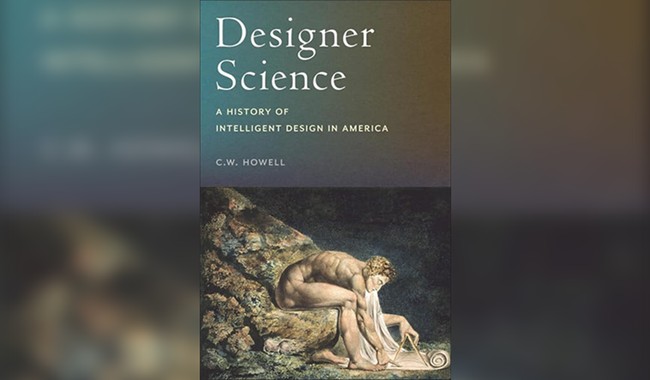
The book, "Designer Science: A History of Intelligent Design in America," by C.W. Howell, pivots on a supposed quote from Lehigh University biochemist Michael Behe, a figure of controversy in top science journals. The case is so serious that NYU Press Senior Editor Jennifer Hammer agreed to take action: “We are pulling the current edition from the market and destroying all existing inventory.”
Even with publishers in crisis over other things, like authors’ use of AI, this move was dramatic. The publisher is also deleting two key passages and issuing a corrected edition. They could have gone further only by placing the book atop a Viking funeral pyre.
The falsehood about Behe was no mere “misquote,” as the website Retraction Watch inaccurately phrased it. Howell put in quotation marks something the man never said — or came close to — saying that could have been checked from courtroom transcripts, and that common sense suggested no one would say about himself.
But as with Dr. Arday, the invention by Dr. Howell, identified on the dust jacket as a religion scholar at Duke University with a Duke PhD, was too confirming of biases to check. Much of opinion at places like NYU, Duke, and Arday’s University of Cambridge is driven by favored narratives. If a story matches the narrative, skepticism dissolves.
In a way, Howell’s fabrication, likely a product of shoddy scholarship alone, is more revealing than Arday’s now-posthumous memoir. The latter was from a popular publisher, a Simon and Schuster imprint. In contrast, NYU Press boasts of double rounds of peer review, each by “at least two scholars with relevant expertise.”
In his Acknowledgments, Howell lists 10 people, including Duke professors, who read the book, apart from its editor at NYU Press. One, a philosophy professor at Baylor University, Francis Beckwith, “not only read the project twice but provided two dozen pages of notes and recommendations.”
Yet another professor, science historian Edward Larson, writing for Christianity Today, praised the book for its “insight” and “candor.”
Not a single scholarly reader, evidently, flagged the suspicious quote. It came purportedly from Dr. Behe’s testimony at the Kitzmiller v. Dover trial in Pennsylvania in 2005. Behe is a proponent of intelligent design, which sees evidence of purpose in biology and other sciences.
Behe’s work has focused on irreducibly complex systems in life, beyond the reach of unguided evolution, and the observation that Darwinian processes overwhelmingly degrade biological information in DNA rather than crafting ingenious novelties.
So, Dr. Howell wrote, “Ultimately, the most damning admission might have come from Behe’s mouth himself, when he confessed on the stand that the ‘plausibility of the argument for ID depends upon the extent to which one believes in the existence of God.’” For Behe, according to Howell, ID “depended on a prior commitment,” not on empirical evidence. Howell comes back to this “testimony” near the book’s end.
You can like ID or hate it, but no biochemist who advocates the idea is going to say his scientific case depends on belief in God. No one apparently noticed the implausibility of Behe’s remark until my colleague Casey Luskin did. Dr. Luskin bird-dogged it: the fake quote isn’t in the testimony.
The judge in the Dover trial inserted it in italics in his decision, with “emphasis added,” but no quote marks, having copied it from a brief by the ACLU that was inaccurately summarizing an article Behe had written. In the original article that got spun into the fake quote, Behe said the exact opposite — that “intelligent design in biochemistry rests exclusively on empirical evidence.”
Dover is the linchpin of Howell’s history. His contribution was to place the quote in “Behe’s mouth himself,” a “damning admission” that forms the linchpin of the linchpin of "Designer Science."
When Luskin contacted NYU Press, they acted shrewdly, fearing a lawsuit or damage to their reputation or both.
There’s another parable here, larger than Arday’s. “We tell ourselves stories in order to live,” wrote the essayist Joan Didion. Misleading stories from academia, instances of narrative-driven scholarly misconduct, are beyond count.
There are tales readily believed by scholars, “in order to live” — because the ideological campus discourse is beyond question. In the Age of Arday and of C.W. Howell, the discourse is due for a genuine scholarly review.
David Klinghoffer is a Senior Fellow at Discovery Institute. His most recent book is "Plato's Revenge: The New Science of the Immaterial Genome."