
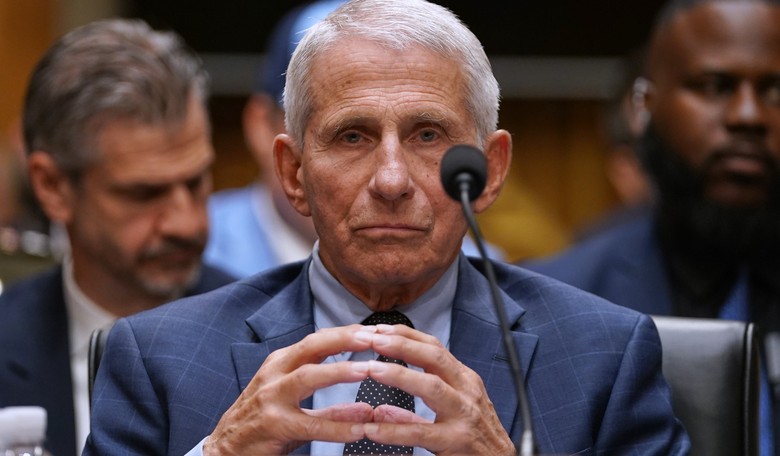
A lot has been made of Dr. Anthony Fauci's journals over the last couple of weeks. And rightfully so. The journals show the factors he considered in shaping the policy that controlled all of our lives for nearly two years. They showed private doubts about things presented to the public as fact. They showed his knowledge of risks associated with the vaccines he publicly assured us were safe. This oversimplifies the extent of it.
This article is not to get into the weeds of COVID, however. Rather, a separate problem is apparent: What took so long? Why is this information only now reaching the public? There are two answers that most government problems ultimately seem to boil down to: government is not transparent unless it is forced to be, and government is extremely inefficient.
These two problems have existed for decades. The Freedom of Information Act (FOIA) — relevant to this discussion — was created to give the public access to government records. The goal was transparency. The process should be simple: a citizen asks for records, and, according to the law, 20 business days later the government must produce them.
But, in practice, it is far different. When one requests records, what often comes back — months or years later — is records full of redactions, to the point that real substantive information is rarely gleaned. And often, obtaining these records requires litigation, which is prohibitively expensive for the average American.
Consider, too, how inefficient government is. As it stands, every government agency within the executive branch has its own servers, IT systems, personnel, and other resources. Not only does this cause the taxpayer to pay for significant redundancy, but it also creates a situation where the left hand doesn’t know what the right hand is doing.
While it is unknown exactly how the Fauci journals were discovered, it appears that it took an act of Congress to finally access them. But it was reported by Secretary Robert F. Kennedy Jr. that “It took us about eight months to dig these out of 11 separate servers, where they had been sequestered and secreted….”
The situation demonstrates both problems all at once. Not only was at least one agency attempting to hide government records, it also did so by exploiting the IT systems that are so spread out and inaccessible. The idea of the public enjoying transparency under FOIA seems like a pipe dream when this is a reality.
The Council to Modernize Governance has already been discussing both of these problems. It has developed policy change proposals for both FOIA and modernization efforts for executive branch IT systems. Indeed, there are simple reforms that Congress could pass now that would begin to fix both of these longstanding government problems.
First, FOIA should be reformed to require all agencies to proactively publish more government records, rather than requiring the public to request them. Items such as administrative records, calendars of senior officials, external communications, ethics records, settlement agreements, and more should be included in this mandatory publication requirement. And for those records that remain, all records subject to FOIA should be made much easier to search and access by providing searchable, machine-readable formats and indexing, which would not only help citizens craft requests but also make government responses more efficient.
To support this effort, the executive IT system should be modernized and depoliticized by creating an independent agency to manage all of it. It would allow all agency records to be stored, searched, and retrieved in the same way. It would make FOIA requests far easier for both the requester and the government to respond. As an added bonus, cost savings would result from removing redundancy and inefficiency.
Modernization of both FOIA and government IT systems is sorely needed. It would benefit both political parties. Progressives can monitor Trump more easily now. Conservatives can monitor the next Democrat president better in the future.
But in the end, the winner is Americans. We will be better able to monitor our government.
Curtis Schube is the executive director of the Council to Modernize Governance, a think tank committed to making government administration more efficient, representative, and restrained. He is a former constitutional and administrative law attorney.