
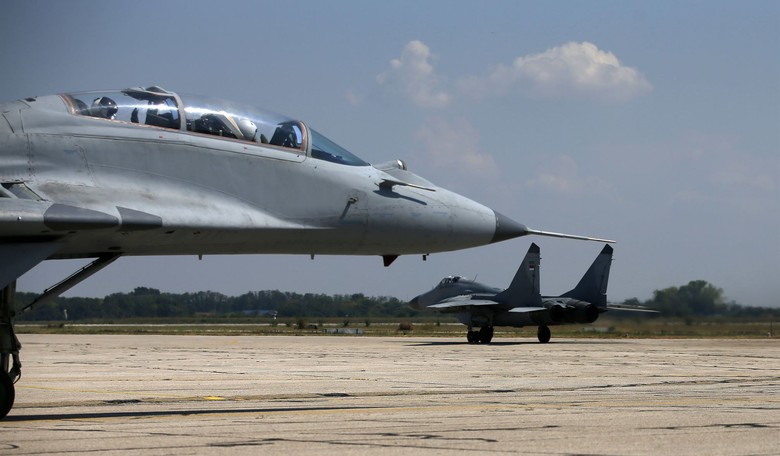
On August 16, 1966, an Iraqi Air Force MiG-21 touched down at an Israeli air base after a daring flight across the Middle East. The pilot, Captain Munir Redfa, an Iraqi Assyrian Christian officer frustrated by discrimination against him and being ordered to bomb Kurdish civilians, defected under the careful orchestration of the Mossad, bringing with him the MiG-21. As a Christian suffering discrimination in Moslem Iraq, Redfa also expressed admiration for Israel, the “few against so many Moslems" for standing up to its Arab neighbors.
Redfa’s legacy, as well as the boldness of the operation, became the cornerstone for a shift in important geopolitical alliances and military success.
Code-named “Operation Diamond,” the three-year effort delivered the Soviet Union’s most advanced fighter plane intact into Western hands for the first time. What followed was not only a triumph for Israeli intelligence but a decisive act of intelligence sharing that gave the United States critical insight into the aircraft it was fighting over Vietnam, and which it would face for decades afterward.
By the mid-1960s, the Soviet supplied MiG-21 had become the backbone of Arab air forces. Egypt, Syria, and Iraq fielded growing numbers of the fast, highly maneuverable plane. Israeli military leaders understood that air superiority would decide future wars, yet they lacked detailed knowledge of the plane’s abilities: its performance limits, radar capabilities, and combat weaknesses. Mossad chief Meir Amit made acquiring a flyable MiG-21 a top priority. Earlier attempts in Egypt failed.
Eventually the Mossad identified Redfa, offered financial security, Israeli citizenship, and safe passage for his family, and arranged the carefully coordinated escape. Redfa took off on a training flight, diverted from his formation, and flew roughly 900 kilometers to Israel, escorted on the final leg by Israeli Mirage fighters. The aircraft was promptly redesignated “007” in a nod to James Bond.
Israeli test pilots and engineers immediately put the MiG through exhaustive evaluation. They flew it against their own Mirage IIIs, mapped its strengths and vulnerabilities, and translated the technical and tactical manuals that arrived with the plane. The knowledge paid rapid dividends. On April 7, 1967, Israeli pilots shot down six threatening Syrian MiG-21s without loss. Two months later, during the Six-Day War, the Israeli Air Force destroyed the bulk of Egyptian and Syrian air power on the ground and in the air. Familiarity with the MiG-21’s performance, particularly its limitations at low altitude and its visibility challenges, contributed directly to that decisive margin of superiority.
Israel then shared its prize. In early 1968, the MiG was given to the United States and transported to a secret facility in Nevada. Under the program called “Have Doughnut,” American pilots and engineers subjected the aircraft to more than 100 flights. The MiG was flown against a variety of U.S. fighters including the F-4 Phantom, F-104, F-105, and others. Analysts discovered key exploitable flaws. Below 15,000 feet, the MiG-21 could not reliably exceed roughly 0.98 Mach because of severe buffeting. Its engine response was sluggish, rear visibility poor, and gunsight limited under high-G conditions. These findings produced concrete tactical recommendations that would prove invaluable: force the engagement into the vertical, exploit energy bleed-off, and use the Phantom’s superior power and radar to control the fight at lower altitudes.
The timing could not have been more important. American aircraft were already engaged in intense combat over Vietnam, where MiG-21s flown by North Vietnamese pilots posed a serious threat to American aircraft. “Have Doughnut” data informed immediate adjustments in training and tactics. The insights helped shape the creation of the U.S. Navy’s Fighter Weapons School, popularly known as Top Gun, in 1969, and later the Air Force’s Red Flag exercises and the secret Constant Peg aggressor program that flew actual MiGs against American pilots through the 1980s. Dissimilar air combat training, once limited, became a cornerstone of U.S. readiness. Pilots who had never seen a real MiG-21 in the air suddenly trained against one, revealing how the enemy actually flew and fought.
The sharing of the MiG-21 and the intelligence that was derived from that also carried diplomatic weight. As a result of access to the MiG, the United States agreed to sell Israel the F-4 Phantom, an aircraft Washington had previously been reluctant to provide. That sale marked a turning point in the mutually beneficial strategic relationship between Israel and the United States. Israel gained a powerful U.S. fighter that served for decades; America gained a proven partner willing to take extraordinary risks and then share the results with its ally. The pattern of intelligence cooperation that began with “Operation Diamond” continued for decades through other captured or defected Soviet systems and joint analysis of battlefield lessons, and continues still today.
“Operation Diamond” illustrated a deeper truth about the Israel-United States partnership. Israel’s geographic position and constant exposure to Soviet-supplied weapons then gave it unique opportunities to acquire and evaluate systems that the United States could study only at a distance. By transferring the MiG-21 and the knowledge derived from it, Israel accelerated American understanding of Soviet fighter technology at a time when that knowledge had direct combat relevance. The United States, in turn, supplied advanced platforms and political support that strengthened Israel’s qualitative military edge.
The adversaries have changed, but 60 years later the legacy of that alliance and partnership born in “Operation Diamond” endures. The principles of realistic adversary training, detailed technical exploitation of captured equipment, and mutual trust in intelligence sharing remain central to both countries today. That’s been proven in numerous intelligence operations in the past decades, as well as the ongoing war against the Islamic Republic of Iran. “Operation Diamond” was more than a single dramatic defection and intelligence coup. It was a demonstration that intelligence cooperation between close allies can reshape the balance of power in the skies and influence the outcome of wars still to come.
While today, it may be taken for granted that Israel and the U.S. and their respective military and intelligence agencies work closely together for one another’s mutual benefit, it cannot be understated that at the time of “Operation Diamond” and providing the Soviet MiG-21 to the U.S., Israel was still a new nation, less than two decades since declaring independence, and fighting every day for its survival.
The enemy has morphed, but the threats remain the same. The legacy of “Operation Diamond” still plays an active part in the important relationship between the two countries. In the spirit of renaming the MiG to 007, its legacy underscores the adage of the name of another James Bond thriller: diamonds are forever.