
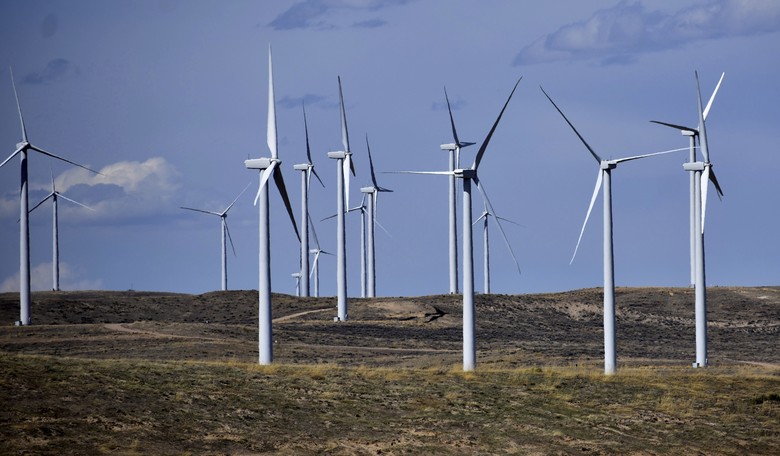
So much for the lies about clean, renewable, sustainable energy. Where will all the trash go?
Daily news feeds present applause lines, and numerous movies include framing shots with wind turbines – blatantly or subtly promoting the “inevitable transition” from “dirty” fossil fuels to “low-cost, clean, green, renewable, sustainable” wind and solar power.
Net Zero Green New Deal proponents need to start pondering some immutable realities.
Yes, even modern coal plants emit pollutants, along with plant-fertilizing carbon dioxide and other “greenhouse gases.” Gas plants emit CO2 and water vapor.
And yes, wind turbines, solar panels, and vehicle and grid backup batteries have no such emissions – at their point of operation. But they generate massive pollutants in their manufacturing and other stages.
Modern coal, gas, nuclear and hydroelectric power plants operate for 50 years or more. They generate 24/7 and don’t need backup power. A few can electrify entire cities. They’re built mostly from concrete, steel, aluminum and copper, with few exotic metals and minerals imported from adversarial nations.
They don’t have to be replaced every 20-30 years, as wind and solar generators do. A few thousand suffice. They can be built near urban and industrial centers, instead of hundreds of miles away, connected by long transmission lines.
The more we require that cars, cooking, hot water and home heating systems run on electricity, instead of gasoline or natural gas – and that the electricity comes from “renewable energy” – the more wind turbines, solar panels, and backup coal, gas or battery power we need for windless, sunless hours, days and weeks.
The more turbines and panels we install, the more we have to put them in increasingly poorer quality areas, the worse they then perform, the less electricity they generate, and the more we need.
The more we install, the more mining, drilling and processing we need for the metals, minerals and petrochemicals to manufacture them – from ever-lower quality deposits. Billions of tons of rock must be extracted to get millions of tons of ores, which are processed with acids and other chemicals, to get thousands or hundreds of pounds of metals. Vast stretches of farmlands, wildlife habitats and scenic areas are despoiled and poisoned in the process, but they’re far away and out of sight.
Net Zero zealots rarely admit any of this – or that the “climate crisis” is exaggerated and fabricated. But they should at least acknowledge that wind, solar and battery systems will leave behind the biggest and most toxic garbage heaps in human history:
- Billions of tons of airborne, liquid and solid wastes, mostly left untreated in overseas operations that aren’t run by Western mining companies that are highly regulated on environmental, workplace safety, fair wage, child labor and other standards; and
- Billions of tons of enormous, non-recyclable, non-burnable trash – wind turbine foundations and blades, solar panels, vehicle and backup batteries, transformers and other components that mostly get left behind where installed or end up in huge landfills.
I’ve written multiple articles and reports on impacts from “renewable” energy mining and installations. The International Energy Agency has issued extensive studies. Even progressive American film producer Michael Moore has highlighted these inconvenient truths.
Databases and other sources estimate that the United States currently has about 76,000 wind turbines and more than 650,000,000 photovoltaic solar panels. Together, they generate about 17 percent of US electricity – intermittently and unpredictably, 25-30 percent of the year. Globally, some 400,000 turbines and 6,000,000,000 panels do likewise.
As of June 2026, the USA accounted for roughly 9,000,000 electric-vehicle and home-backup batteries, plus 52,000 MW of power capacity (140,000 MWh of energy storage) in grid-scale backup batteries. (Existing grid backup installations costing 10s of billions of dollars will provide enough electricity to power a state for less than a couple of hours on a hot, windless day.)
This is a tiny fraction of what the United States alone would need to power all-electric cities and industries, operate EVs, and recharge backup batteries for windless, sunless days and weeks – using only wind and solar for electricity generation.
There are few adequate legislative, regulatory, bond, or financial requirements for removing this equipment and its foundations after they’ve been damaged or destroyed in storms or have reached the end of their productive lives.
My apologies for all the following numbers. Just focus on the italicized paragraphs.
Depending on turbine size and height, US onshore wind turbine foundations are 50-100 feet in diameter and 10-16 feet deep. Each is composed of 460-1,500 cubic yards of concrete, weighing 1,100-2,700 tons.
That’s 76,000 foundations and (using averages) 145,000,000 tons of concrete and rebar, just for the USA!
Onshore wind turbine blades average 210 feet in length, 13 feet in height, and 24 tons. (Offshore turbine blades are much longer, thicker and heavier.) Each turbine has three blades.
That’s 5,500,000 tons of American blades. Laid end-to-end, they’d stretch 48,000,000 feet: 9,100 miles – nearly two round-trip flights from Washington, D.C. to Los Angeles!
Using a combined residential/industrial average of 4x6 feet in size, 2 inches deep, and 55 pounds per panel, the 650 million United States photovoltaic solar panels add up to – 2,600,000,000 cubic feet of American solar trash, weighing 18,000,000 tons!
This includes only currently operating United States onshore turbines and panels – not those already dismantled, no future installations, no offshore wind turbines, and no EV or grid-backup batteries.
Cumulative global wind garbage (blades only) is projected to reach 200,000,000 tons by 2050. Cumulative global solar trash: 78,000,000 tons!
Turbine blades are made from fiberglass or carbon-fiber composites. They’re extremely difficult to cut into pieces and almost impossible to recycle. Solar panels are theoretically recyclable, at least for their aluminum frames – but their copper, silver, and other metals are embedded in glass or plastic and nearly impossible to recover economically. Batteries are likewise recyclable, in theory – but it’s a very expensive and dangerous process, because components are prone to massive spontaneous chemical combustion.
The fallback option will be landfilling – or just dumping them somewhere, as an unscrupulous “recycler” did on a million square feet of grassland near Sweetwater, Texas.
So what exactly do corporate and government officials plan to do with these incomprehensible mountains of trash? Where will those landfills be located? In whose backyards? How do they even plan to remove those monstrous wind turbine foundations? How do they plan to PAY for it?
Do you still think wind, solar and battery systems are clean, green, renewable and sustainable? And opposition to wind, solar, transmission line, pipeline and data center installations is insanely intense?
The powers that be are just sweeping these issues under the rug and whistling past the landfill graveyards.
You may want to show up at the next public hearing or shareholders' meeting and demand some answers.
Paul Driessen is senior policy advisor for the Committee For A Constructive Tomorrow (www.CFACT.org) and author of books, reports and articles on energy, environmental, climate and human rights issues.