
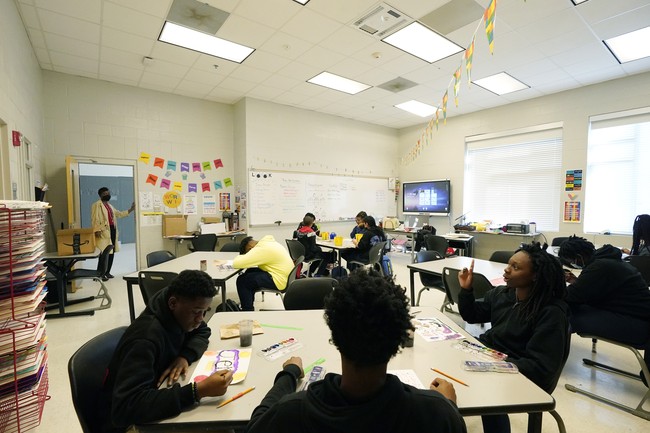
Mississippi might not be the first state Americans think of for education excellence. But recent Nation’s Report Cards reveal a surprising shift in approaches to student learning. In 2013, Mississippi had ranked 49th in fourth-grade reading. But educators, legislators, and parents partnered to turn things around by recognizing what works: phonics. Mississippi’s fourth-graders now rank 9th in the nation — it’s the best rate of improvement in the country.
Something of the same is underway right now concerning another kind of literacy. Recent studies expose one-third of American adults can correctly answer at least four of five basic financial literacy questions regarding inflation, interest rates, bond prices, mortgages, and investment risk. Generation Z is not at all better — perhaps because they tell pollsters they consume most of their knowledge about money from TikTok.
Mississippi students can read; now the Magnolia State hopes students can learn personal finance. The J.P. Wilemon Jr. Financial Literacy Act starts students on a financial literacy journey as young as middle school. Students are now required to learn budgeting, saving, taxes, credit, insurance, investing, consumer protection, and other essential financial skills.
A recent analysis found individuals who had received financial education demonstrated better overall financial health, including stronger day-to-day money management, greater confidence in handling debt, and healthier financial behaviors.
Early financial literacy matters because money mistakes at age 18 or 22 tend to wreak havoc for decades. A young adult who understands compound interest is more likely to begin saving early. A graduate who understands credit utilization is less likely to run down a credit score that will later determine mortgage rates, auto loan costs, and employment opportunities. Someone who recognizes predatory lending practices may avoid paying thousands of dollars in unnecessary interest over a lifetime.
Perhaps the most encouraging aspect of Mississippi’s initiative is that it demonstrates financial literacy need not be a partisan cause.
Republicans and Democrats often disagree about nearly every aspect of education policy. Yet financial literacy has become one of the rare issues on which politicians are willing to reach across the aisle. Students who can balance a budget, evaluate a loan, recognize investment risk, protect against identity theft, file basic taxes, and distinguish between good debt and bad debt are politically achromatic.
Many parents and employers increasingly view this trend as one of the most significant developments in education. The Council for Economic Education reports 39 states now require some form of personal finance education for graduation. And the number requiring dedicated coursework has likewise increased in the past decade. Financial literacy is no longer a niche elective but rapidly becoming a core expectation of student competency.
Mississippi deserves credit. Preparing students for successful careers and meaningful lives includes equipping them with what they need to navigate financial realities they’re sure to encounter from at least the moment they receive their first paycheck. If more states follow Mississippi's example, the next generation of Americans will inherit something more valuable than another political victory.
They will inherit the knowledge to build not debt, but wealth, not confusion but confidence, and not dependence but limitless opportunity.
Shabbos Kestenbaum is a PragerU personality and host of “The Brief" and “Theological.”