
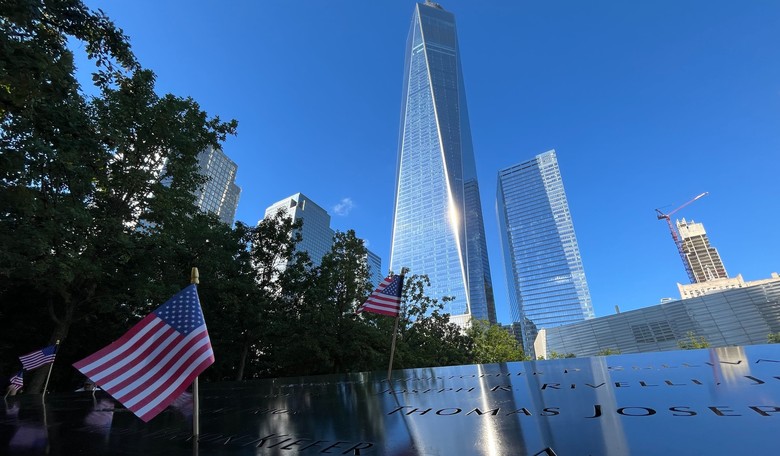
In 30 days, this country marks 25 years since 19 men murdered nearly 3,000 of us on a Tuesday morning that started like any other. A quarter century. Long enough that some of the people reading this column weren’t alive for it. Long enough that the raw, unified grief of that September has faded into something more like a civic ritual — a moment of silence, a name-reading, a flag at half-staff, and then back to whatever we were doing.
I bring this up not for the ceremony of it, but because of what’s happening in the weeks leading up to it, in real American cities, involving real American politics, and it should be setting off alarm bells louder than it apparently is.
Start in Michigan.
Abdul El-Sayed just won the Democratic Senate nomination after campaigning alongside Hasan Piker, a podcaster whose commentary has made him a lightning rod for accusations of anti-Israel extremism and apologetics for terror groups.
Normally you win a primary and start talking to the voters you’ll need in November. El-Sayed had that opportunity. He went the other direction.
Asked directly about the Piker association on Meet the Press, he shrugged it off: “I’m less concerned now with who I’m campaigning with, a lot more concerned about who I’m campaigning to.” Then he said it again, nearly word for word.
Hugh Hewitt called it the El-Sayed/Piker ticket without the sugarcoating. El-Sayed had every opportunity to distance himself from the controversy surrounding someone in his coalition and chose not to.
Then the Muslim Brotherhood noticed.
Ikhwan Online, the organization’s official news outlet, ran a piece celebrating El-Sayed’s primary win, praising his calls to end unconditional U.S. military aid to Israel and his push to redirect American tax dollars away from what the article called support for “the occupation.” The headline, translated, read “El Sayed defeats the Zionists and runs for Senate.”
That should get our attention.
Not because somebody else gets to define El-Sayed’s beliefs for him. They don’t. But when an Islamist organization looks at an American Senate primary and publicly celebrates the result, Americans are allowed to notice. We’re allowed to ask why. We’re allowed to ask what exactly they’re celebrating.
Especially now.
Then there’s McKinney, Texas. Different city. Different circumstances. And we should be careful not to pretend the two stories are the same.
The city council there voted 7-0 to approve an Islamic association’s expansion — a 15,000-square-foot mosque, a 10,000-square-foot classroom building, and a 7,000-square-foot gym — after a four-hour meeting where more than a hundred residents showed up to speak. Many opposed the project.
One Iranian immigrant, someone who said she had actually lived under Sharia law, told the council plainly: “I’m telling you, this is a bad idea and you’re going to regret not listening to people like us who lived under Sharia law.”
The council heard the testimony and voted unanimously.
Now, approving a mosque is not evidence of extremism. Being Muslim is not evidence of extremism. And neither should be treated that way.
But questions about radical political Islam aren’t illegitimate simply because asking them makes somebody uncomfortable. We learned that distinction the hardest way imaginable.
What frustrates me is watching radical actors gain attention and influence while our civic memory of why any of this matters seems to fade.
Twenty-five years later, the questions aren’t the same ones we were asking in September 2001. They couldn’t be. But we should still pay attention to who candidates surround themselves with. We should notice when extremist organizations celebrate an American election result. And when public officials make decisions, the people they represent are entitled to ask questions about them.
That doesn’t put every Muslim American or every mosque into the same conversation.
Nor should it.
September 11 wasn’t committed by neighbors peacefully practicing their faith. It was committed by Islamist terrorists animated by an ideology that Americans subsequently spent enormous amounts of blood and treasure fighting.
Surely we’re still capable of knowing the difference.
And maybe that’s what bothers me most as this anniversary approaches.
Twenty-five years is long enough for memory to become history. Eventually children study it for a test. Adults commemorate it once a year. Politicians mention it in speeches.
Then everybody goes home.
But citizenship can’t be something we practice one morning every September.
Pay attention to the people seeking power. Know who surrounds them. Notice who celebrates their victories and ask why. If something happening at your city council bothers you, show up and say so.
Then remember there’s an election.
Twenty-five years of memory won’t decide one. People in Michigan will make their judgment in November. The people who packed that McKinney council meeting will eventually have their opportunities at the ballot box, too.
September 11 deserves to be remembered for what happened that morning and, above all, for the people we lost.
But remembering isn’t the same thing as paying attention.
That work doesn’t start in 30 days.
It starts now.